
Quick answer: Your knees hurt after running because of weak hip muscles (25-30% weaker than pain-free runners), overstriding, worn-out shoes (300+ miles), or doing too much too soon. Here’s exactly what works to fix it.
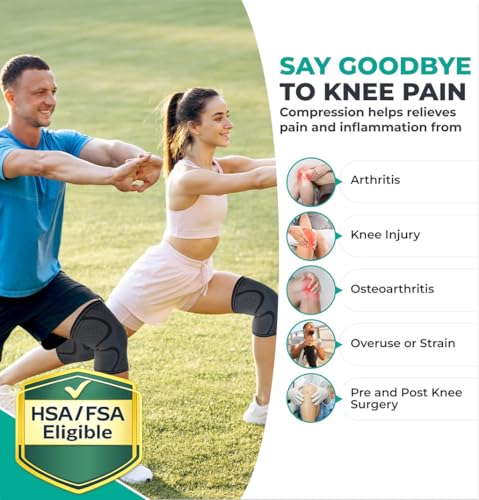
Last month, Lynda, 54, came to us barely able to walk after an 8-week bout with runner’s knee. She’d been running for 15 years without issues until suddenly her knees betrayed her. Within 6 weeks of following the protocol below—specifically the hip strengthening routine—she was back to her usual 20 miles per week, pain-free. Her story isn’t unique. We see this pattern constantly with runners over 50, and the fix is almost always the same: strengthen the hips, fix the form, respect recovery time.
Why Do My Knees Hurt After Running – Types
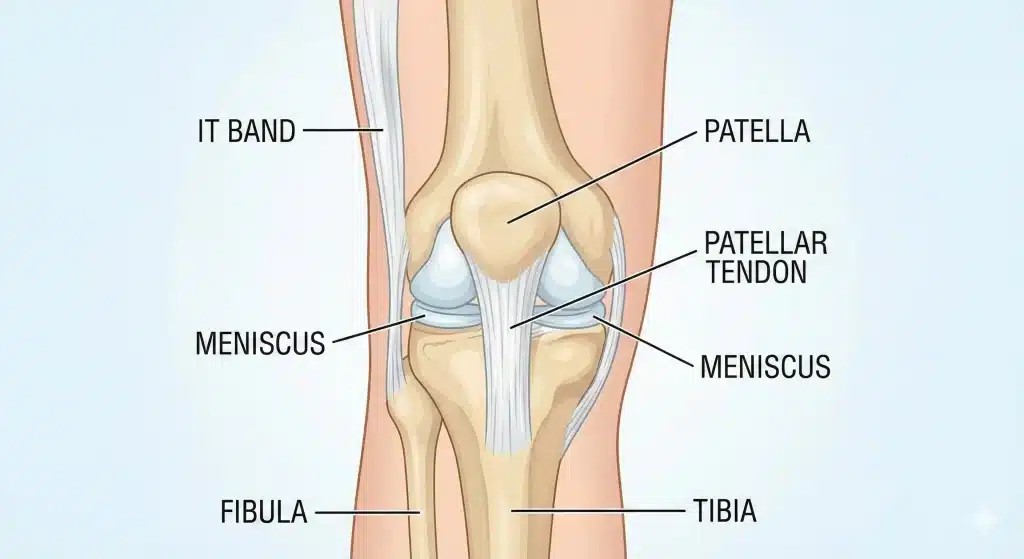
Common Types of Running Knee Pain
| Knee Pain Type | Location | Main Cause | Recovery Time | Key Fix |
|---|---|---|---|---|
| Runner’s Knee (PFPS) | Behind kneecap | Weak quads, hip weakness | 6-12 weeks | Hip strengthening + form work |
| IT Band Syndrome | Outside of knee | Weak glutes | 4-8 weeks | Glute activation + foam rolling |
| Patellar Tendinitis | Below kneecap | Overuse, sudden intensity increase | 8-16 weeks | Eccentric exercises |
| Meniscus Issues | Inside knee joint | Age-related degeneration | 6-12 weeks (or surgery) | Strength training + PT |
🚨 Quick Action Plan: First 72 Hours
If your knees hurt right now:
✅ Stop running immediately – Don’t push through pain
✅ Start gentle movement – Walk 20-30 minutes daily, swim, or cycle
✅ Wear compression – Knee sleeve ($15-25) during all activities
✅ Elevate 3-4x daily – 15-20 minutes above heart level
✅ Begin hip exercises – Start clamshells and glute bridges (see below)
Red flags requiring immediate medical attention:
- Knee buckling during walking
- Cannot fully straighten leg
- Swelling within 2 hours of injury
- Severe pain at rest or night
Most Common Questions About Knee Pain After Running
Why do my knees hurt when I run but not when I walk?
Running creates impact forces 2-3x your body weight versus 1-1.5x for walking. This higher impact reveals weaknesses in your hips, quads, or running form. The good news? It’s likely an overuse injury, not structural damage—strengthening exercises will fix it.
Can I run with runner’s knee?
Only if pain is mild (1-3 out of 10). Reduce mileage by 50%, avoid hills/speed work, and do daily hip strengthening. Running through moderate pain (4+) extends recovery from 6 weeks to 12-18 weeks.

What is the fastest way to heal runner’s knee?
Combine these daily for 6-8 weeks:
- Hip strengthening (clamshells, side-lying abduction, single-leg deadlifts)
- Foam rolling (IT band, quads)
- Form corrections (increase cadence 10%)
- Cross-training (swimming, cycling)
Most runners see 50% pain reduction in 3 weeks. Research published in the British Journal of Sports Medicine confirms that hip strengthening programs reduce patellofemoral pain by 43% in just 6 weeks.
How long should I rest a sore knee?
- Mild pain (1-3/10): 2-3 days off, return at 50% mileage
- Moderate pain (4-6/10): 7-10 days complete rest, then run-walk intervals for 2 weeks
- Severe pain (7+/10): Rest until pain-free single-leg squats (2-4 weeks), then 4-week return protocol
What are the best shoes for knee pain?
Look for:
- Adequate cushioning (10-12mm heel-to-toe drop)
- Proper arch support for your foot type
- Replace every 300-500 miles (most critical factor)
- Budget $120-180 for quality shoes
See our best running shoes for weak ankles guide for specific models.
Can weak glutes cause knee pain when running?
Absolutely. Weak glutes allow your femur to rotate inward (valgus collapse), forcing improper knee tracking. A study in the Journal of Orthopaedic & Sports Physical Therapy found runners with knee pain have 25-30% less hip strength than pain-free runners. Fix requires 8-12 weeks of progressive hip strengthening 3x weekly.

The 5 Main Causes of Knee Pain After Running
1. Weak Hip and Glute Muscles (Most Common)
Your hips control your knees. When your gluteus medius is weak, your femur rotates inward during the stance phase of running—imagine your knee caving inward with each step. This forces the patella to track incorrectly, creating friction and inflammation.
The fix: 8-12 weeks of hip strengthening, 3-4 days per week
The trade-off: Adds 30-40 minutes to training schedule, but eliminates 6-8 weeks of forced rest from injury
Check out low impact exercises for seniors with bad knees for joint-friendly options.
2. Overstriding and Poor Running Form
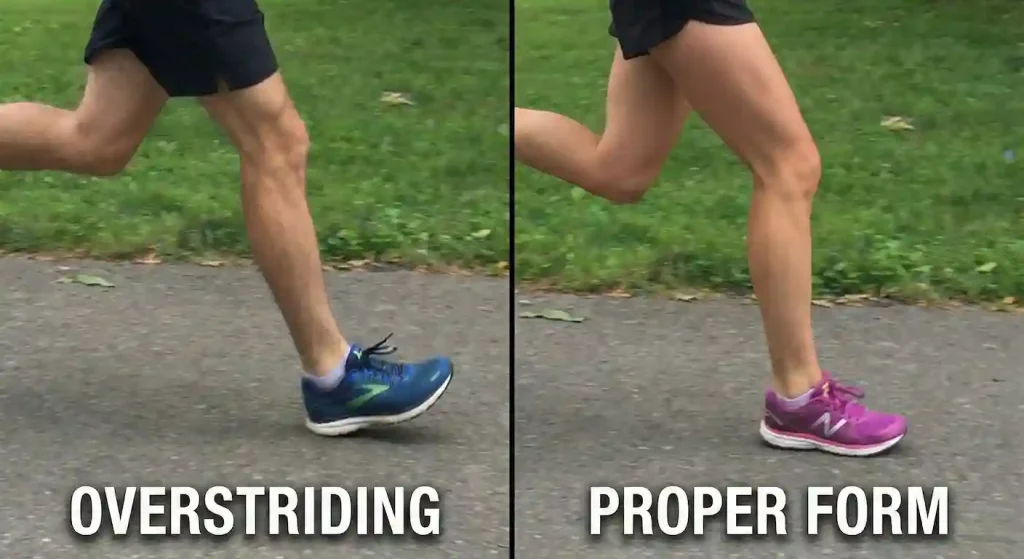
The test: Film yourself running. If your knee is straight when your foot lands, you’re overstriding—like hitting the brakes with every step.
Quick fixes:
- Increase cadence from 150-160 to 170-180 steps per minute (reduces impact 20%)
- Land with 15-20 degree knee bend
- Foot should strike under hips, not in front
The trade-off: Feels awkward for 3-4 weeks, pace temporarily slows 30-45 seconds per mile, but then improves permanently

3. Worn-Out Running Shoes
The compression test: Press thumb into midsole. If it doesn’t spring back or compresses 1/4 inch+, the foam is dead.
Replace at:
- 300-500 miles (about 4-6 months for 20 miles/week)
- When midsole feels flat/unresponsive
- Visible wear on outsole
The trade-off: $120-180 upfront = $0.30-0.60 per mile (cheaper than injury)
4. Training Errors: Too Much, Too Soon
The 10% rule: Increase weekly mileage by only 10% per week
Example progression from 15 to 30 miles:
- Week 1: 15 miles
- Week 2: 16.5 miles
- Week 3: 18 miles
- Week 4: 13 miles (recovery week – critical!)
- Week 5: 20 miles
- [Continue pattern…]
Why it matters: Your cardiovascular system adapts in 2-3 weeks. Your joints need 8-12 weeks. The gap creates injury.
5. Age-Related Cartilage Changes
After 50, you lose 1-2% of knee cartilage volume per decade. This means:
✅ You need: 48-72 hours between hard runs
✅ Best schedule: 3-4 quality runs per week
✅ Supplement with: Joint supplements for knees
For women 50+: Declining estrogen during and after menopause accelerates cartilage loss and reduces collagen production. This makes joint protection even more critical—prioritize strength training and adequate protein intake (0.55-0.73g per pound bodyweight) to preserve muscle mass that protects your knees.
The good news? Regular running actually stimulates cartilage health through improved nutrient flow—you just need adequate recovery between sessions.
The 8-Week Hip Strengthening Protocol (Non-Negotiable)
This is the foundation. Do 3x weekly on non-running days.
Weeks 1-2: Foundation Phase
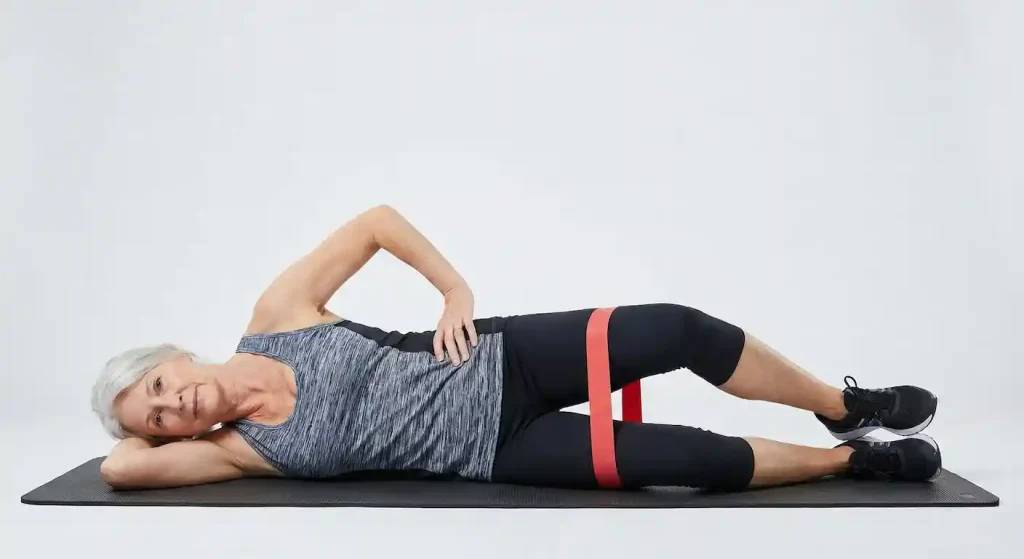
Clamshells (3×15 each side):
- Lie on your side, knees bent 90 degrees
- Resistance band around thighs just above knees
- Keep feet together, lift top knee like opening a clamshell
- Imagine squeezing a walnut between your glute muscles at the top
Side-lying hip abduction (3×12 each side):
- Lie on your side, bottom leg bent for stability
- Straighten top leg, lift toward ceiling
- Keep toe pointing forward (not up toward ceiling)
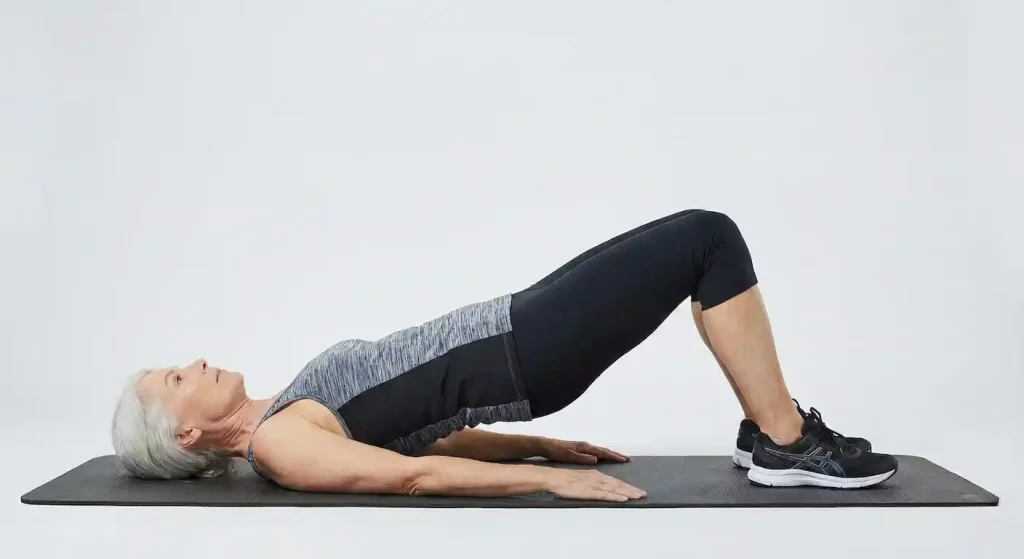
Glute bridges (3×15):
- Lie on back, knees bent, feet hip-width apart
- Squeeze glutes and lift hips until body forms straight line from knees to shoulders
- Hold 2 seconds at top
Single-leg balance (Hold 30 seconds, 3 sets each leg):
- Stand on one leg, keep hips level
- Progress by closing eyes
Weeks 3-4: Strength Phase
- Banded lateral walks: 3×20 steps each direction
- Single-leg deadlifts: 3×10 each leg (hinge at hip, keep back flat like tipping a teapot)
- Bulgarian split squats: 3×8 each leg
- Step-ups (12-inch box): 3×10 each leg
Weeks 5-8: Power Phase
- Single-leg box squats: 3×8 each leg
- Lateral bounds: 3×10 each side
- Single-leg Romanian deadlifts: 3×10 each leg
- Monster walks: 3×15 steps each direction
Timeline:
- Feel stronger: 3 weeks
- Visible improvements: 6 weeks
- Full strength gains: 8-12 weeks
Daily Mobility Work (10 Minutes)
Do this EVERY morning:

- Couch stretch (quad): Hold 90 seconds each side
- Back knee on floor near wall/couch, front foot flat
- Upright torso, feel stretch in front of back thigh
- Pigeon pose (hip): Hold 90 seconds each side
- Front shin across mat, back leg extended behind
- Fold forward to increase stretch
- IT band foam roll: Roll slowly 60-90 seconds each side
- Lie on side, roller between hip and knee
- Use forearm and bottom leg to control pressure
- Quad foam roll: Roll slowly 60-90 seconds each leg
- Lie face down, roller under thigh
- Roll from hip to just above knee
Research: 5 minutes pre-run + 5 minutes post-run = 50% injury risk reduction

Immediate Relief: What to Do Right Now
Updated RICE Protocol
First 48 hours:
- ✅ Relative rest (gentle walking, swimming, cycling 20-30 min daily)
- ✅ Compression (knee sleeve during all activities)
- ✅ Elevation (15-20 minutes, 3-4x daily, above heart level)
- ✅ Anti-inflammatories (ibuprofen 200-400mg for 3-5 days max)
- ❌ Ice (may slow healing by reducing blood flow – skip this)
Massage Guns for Knee Pain
Protocol:
- Use round ball attachment, medium intensity
- Work quad, IT band, calf for 60-90 seconds each
- Do 2-3x daily
- Never directly on knee joint
Cost: $150-300 for quality (cheap ones break)
Alternative: Manual foam rolling (free, more effort)
See our guide: Are massage guns good for knee pain?
Knee Sleeves vs. Braces
For most runner’s knee: Neoprene knee sleeve (3-5mm thickness)
- McDavid sleeves: $15-25
- Wear during runs and daily activities for 2-3 weeks
For severe pain: Hinged knee brace
- DonJoy braces: $80-200
- Provides structural support
Running Form Corrections
1. Increase Cadence by 10%
Current 160 spm → Target 176 spm
The drill: 1-mile intervals at target cadence, 2-minute recovery walks. Do 4-6 intervals, 2x weekly for 4 weeks.
Use metronome app to maintain rhythm. Imagine running on hot coals—quick, light steps.
2. Land Midfoot, Not Heel
Transition plan:
- Week 1-2: 5-minute midfoot drills at end of easy runs
- Week 3-4: 8-minute drills
- Week 5-6: 12-minute drills
- Week 7-8: Natural integration
Or use hills: Running uphill naturally promotes midfoot striking (5-10 minutes, 2x weekly)
Visual cue: Imagine kissing the ground with each step rather than stomping it.
3. Choose Softer Surfaces
Impact absorption:
- Concrete: 0% (avoid)
- Asphalt: 10%
- Trails: 30-40% (best for long runs)
- Track: 50-60% (best for speed work)
See our best shoes for knee pain guide for proper footwear.
Eccentric Exercise for Patellar Tendinitis
If you have pain below your kneecap, this is proven to work:
The protocol:
- Stand on 4-inch step with affected leg
- Lower slowly (3-4 second count) until heel touches ground—imagine controlling an elevator descending
- Use good leg to step back up
- Repeat 15 times, 3 sets, 2x daily
Pain level: Should feel 5-6 out of 10 (deep ache, not sharp)
Timeline: 50% reduction in 6 weeks, resolved in 12 weeks
Critical: Daily consistency required
Strength Training for Runners Over 50
Minimal effective dose:
- 2 sessions per week
- 30-40 minutes each
- Focus: single-leg work, hip stability, posterior chain
Sample session:
- Goblet squats: 3×10 (hold weight at chest, squat deep)
- Bulgarian split squats: 3×8 each leg (back foot elevated)
- Romanian deadlifts: 3×10 (hinge at hips, slight knee bend)
- Single-leg calf raises: 3×12 each leg
- Pallof press: 3×10 each side (anti-rotation core work)
The stats: Runners who strength train have 50% fewer injuries than those who only run.
Support recovery with proper nutrition: protein powder for women over 50
Smart Running Schedule for Ages 50+
3-Day Schedule (Maintenance)
- Day 1: Easy run (30-40 min)
- Day 2: Rest or cross-training
- Day 3: Tempo/intervals (30-40 min)
- Day 4: Rest or cross-training
- Day 5: Long run (60-90 min)
- Days 6-7: Rest or cross-training
4-Day Schedule (Improvement)
- Day 1: Easy run (30-40 min)
- Day 2: Strength training
- Day 3: Workout (40-50 min)
- Day 4: Rest or cross-training
- Day 5: Easy run (30-40 min)
- Day 6: Long run (75-120 min)
- Day 7: Rest
Key: 48-72 hours between hard sessions. Quality over quantity.
Also read: How to prevent shin splints
Supplements That Actually Work
For joint health (all require 8-12 weeks to see results):
| Supplement | Dosage | Benefit | Monthly Cost |
|---|---|---|---|
| Glucosamine & Chondroitin | 1,500mg + 1,200mg | 20-30% pain reduction | $20-35 |
| Omega-3 (EPA/DHA) | 2-3g daily | 30-40% inflammation reduction | $15-30 |
| Collagen Peptides | 10-15g daily (pre-workout) | 25% pain reduction in 6 months | $25-40 |
| Curcumin (with piperine) | 1,000mg daily | Anti-inflammatory (ibuprofen level) | $15-25 |
For muscle/tendon health:
Protein: 0.55-0.73g per pound bodyweight
- 150-lb person needs: 82-110g daily
- Distribute: 25-30g breakfast, 30-40g lunch, 30-40g dinner, 15-20g post-workout
Alternative Training During Recovery
Deep Water Running
- Maintains VO2max within 5% of land running
- Zero impact
- 30-60 minutes, 3-4x weekly
- Use aqua jogger belt, maintain 170-180 spm
Cost: $30-80 monthly for pool access
Trade-off: Boring, but maintains fitness perfectly
Cycling
- Maintains aerobic fitness, minimal knee stress
- 45-60 minutes at moderate intensity, 3-4x weekly
Critical bike fit:
- 25-30 degree knee bend at bottom of pedal stroke
- Saddle height = hip height when standing
4-Week Return-to-Running Plan
Once pain-free during daily activities and single-leg squats:
| Week | Interval | Total Time | Frequency |
|---|---|---|---|
| 1 | 2 min run / 1 min walk | 20 min | Every other day |
| 2 | 4 min run / 1 min walk | 25 min | Every other day |
| 3 | 9 min run / 1 min walk | 30 min | 3-4x weekly |
| 4 | Continuous running | 20-30 min | 3-4x weekly |
Stop immediately if:
- Pain during or after running
- Swelling lasting 2+ hours
- Pain during single-leg squats
- Limping or altered gait
Special Considerations: Running After Knee Replacement
If you’ve had a knee replacement and want to return to running, the approach is different:
Timeline: Most orthopedic surgeons recommend waiting 12+ months post-surgery before attempting running. Your surgeon’s specific clearance is essential.
Modified approach:
- Start with 6+ months of strength training and pool running
- Progress to elliptical, then treadmill walking
- Begin run-walk intervals only after surgeon approval
- Expect 18-24 months total before comfortable running
- Many runners switch to lower-impact activities (cycling, swimming, hiking) long-term
Reality check: About 60% of knee replacement patients who were runners pre-surgery return to some level of running. Expectations need adjustment—think 2-3 runs weekly at easy pace, not marathon training.
When to See a Doctor
Within 48 hours:
- Knee buckling during normal walking
- Cannot fully straighten leg
- Swelling within 2 hours of injury
- Popping/grinding with movement
- Pain waking you from sleep
Within 2 weeks:
- Pain lasting 2+ weeks despite rest
- Pain worsening with activity modification
- Knee locking (gets stuck in one position)
- Morning stiffness lasting 30+ minutes
Imaging: X-rays show bone issues; MRI reveals soft tissue damage (ligaments, meniscus, cartilage)
Cost: $150-300 visit (with insurance co-pay). But catching meniscus tears early = 6 weeks PT instead of surgery.
The Creatine Question
For runners over 50 with muscle weakness contributing to knee pain:
The science:
- 5g daily increases strength 8-15% over 12 weeks
- Improves bone density
- Cognitive benefits for older adults
- Stronger quads/glutes = better shock absorption
Protocol: 5g daily (no loading phase), mix with water, take anytime
Cost: $15-25 monthly
Trade-off: 2-4 lbs initial water weight (normalizes after 3-4 weeks)
Complete guide: Creatine for seniors
Recovery Timeline: Set Realistic Expectations
| Condition | Recovery Time | Can I Run? |
|---|---|---|
| Runner’s knee (PFPS) | 6-12 weeks | 50% volume + cross-training |
| IT band syndrome | 4-8 weeks | Cut mileage 30-50% |
| Patellar tendinitis | 8-16 weeks | Modified training only |
| Meniscus damage (mild) | 6-12 weeks | PT + strength training |
The hard truth: Running through pain extends recovery 2-3x. A 6-week issue becomes 12-18 weeks.
The Bottom Line
The 80/20 rule: 80% of knee pain resolves with hip strengthening, form corrections, and smart training. Only 20% needs medical intervention.
What works:
✅ 8-12 weeks consistent hip/glute strengthening
✅ Daily mobility work
✅ Proper shoes (replace every 300-500 miles)
✅ 10% weekly mileage increases
✅ 48-72 hours between hard sessions
What doesn’t work:
❌ Ignoring pain
❌ Running through inflammation
❌ Spot treatments without fixing root causes
❌ Quick fixes instead of systematic rehab
Your knees have carried you this far. Treat them right and they’ll carry you for decades more. Start with the hip exercises, commit to 8 weeks of consistent work, and watch the pain disappear.
Now lace up those shoes and get back out there—just strengthen those hips first.
Complete exercise guide for seniors: 5 exercises to do every day for over 60
About the author

Rick Huey is a fitness writer who has dedicated his life to living an active lifestyle. With more than 30 years of experience in the fitness industry, Rick is a respected contributor for FitFab50.com, where he shares his wealth of knowledge with a wide audience. His dedication to promoting the benefits of living an active lifestyle has inspired many people to pursue their own fitness journeys with enthusiasm and dedication.
Last update on 2026-04-08 / Affiliate links / Images from Amazon Product Advertising API