Let me guess. You want that warm, sun-kissed glow, but you are absolutely not willing to bake in the sun or step foot in a tanning bed. Good. Neither am I. That is exactly why I went deep on researching the best self-tanner dermatologist recommended options, specifically with us women over 50 in mind.
Here is the thing: our skin in our fifties and beyond is genuinely different. It is drier, thinner, and more prone to patchiness when products are applied incorrectly. What works brilliantly on a 28-year-old can look blotchy and uneven on mature skin. So I am sharing exactly what dermatologists say to look for, what to avoid, and the specific products that have earned real expert praise.
Medical Disclaimer: This article is for informational purposes only and is not a substitute for professional medical advice. Always consult a board-certified dermatologist before adding new skincare products to your routine, especially if you have a skin condition, allergies, or are taking medications that affect your skin.
Why Dermatologists Recommend Self-Tanners Over Sun Tanning
Before we get into the products, I want you to hear this clearly: dermatologists are unanimous on this topic. UV radiation from the sun and tanning beds is a known carcinogen. A single tanning bed session can increase your melanoma risk significantly, and after 50, our skin has already accumulated decades of UV exposure.
Self-tanners give you all the warmth of a bronzed glow without adding one more minute of UV damage. They work through a safe, well-studied chemical reaction. The active ingredient, dihydroxyacetone (DHA), reacts with amino acids in the dead cells on your skin’s surface to temporarily shift your skin tone to a deeper, warmer shade.
The color is not a dye. It is a natural browning reaction, similar in principle to how a cut apple turns brown when exposed to air. It fades on its own as your skin naturally sheds those top layers, usually over five to seven days.
Of course, self-tanner never replaces real sun protection. If you are heading outdoors this season, our guide to the best sun shirt for hot weather covers the smartest ways to protect your skin while you enjoy that bronze glow.
What Makes a Self-Tanner “Dermatologist Recommended”?
Not every product earns that label. Here is what board-certified dermatologists consistently look for in a formula, and what matters even more when your skin is over 50.
DHA concentration that is appropriate for your skin tone. Most quality self-tanners contain between three and fifteen percent DHA. Higher is not always better. Buildable formulas that let you layer are far more forgiving and give a more natural result on mature skin.
Hydrating ingredients. Dry skin and self-tanner are not friends. Dry patches absorb DHA unevenly and go darker, which creates that streaky, blotchy look none of us want. Dermatologists specifically look for formulas that include hyaluronic acid, aloe vera, argan oil, or glycerin alongside the DHA.
Fragrance-free or low-fragrance options. Our skin becomes more reactive with age. Fragrance is one of the most common contact allergens, and mature skin is less forgiving of irritating ingredients. Fragrance-free formulas are the gold standard for anyone with sensitivity.
Non-comedogenic formulas. This matters if you plan to use a self-tanner on your face, chest, or decolletage. Non-comedogenic means the formula will not clog pores or cause breakouts.
No harsh additives or alcohol-heavy bases. Alcohol-dominated formulas evaporate fast and can further dehydrate already-dry mature skin.
If dry skin is already a challenge for you, getting that under control before you start self-tanning makes a real difference in your results. Our roundup of the best body lotion for aging crepey skin is an excellent place to start.
The Best Formats for Women Over 50
Here is something most articles skip: the format of your self-tanner matters just as much as the ingredients, especially once we hit our fifties.

Mousses are the most popular format and for good reason. They spread evenly, dry quickly, and give you good control during application. They work beautifully on most skin types but can feel slightly drying on very dry skin, so moisturize well first.
Gradual tanning lotions are my personal favorite recommendation for beginners or for anyone who wants a low-risk start. You apply them like a regular body lotion and the color builds slowly over several days. If you go too light or too dark, it is easy to adjust.
Tanning drops are intensely customizable. You add a few drops to your existing moisturizer or serum and the color develops gradually. This is especially lovely for the face, where precision matters most.
Tanning mists and sprays offer fast, all-over coverage and dermatologists note they are good for avoiding over-application in any one spot. They do require a little practice to apply evenly on your back and hard-to-reach areas.
Best Self-Tanners Dermatologist Recommended: Our Top Picks
I have organized these by format so you can go straight to what will work best for your lifestyle.
Best Overall Mousse: St. Tropez Self Tan Classic Bronzing Mousse
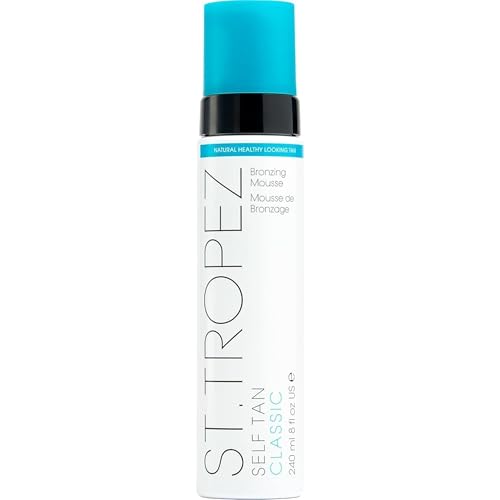
St. Tropez is the name that comes up again and again in dermatologist roundups, and there is a very good reason for that. The formula uses a balanced DHA level that develops over several hours into a natural-looking, warm brown tone. It contains skin-conditioning ingredients and the mousse texture makes it genuinely easy to control during application.
The color guides are also a helpful feature. The formula applies with a light bronze tint so you can see where you have applied it and avoid missing patches. That feature alone makes it friendlier for mature skin where precision matters.
Best Gradual Lotion: Jergens Natural Glow Daily Moisturizer
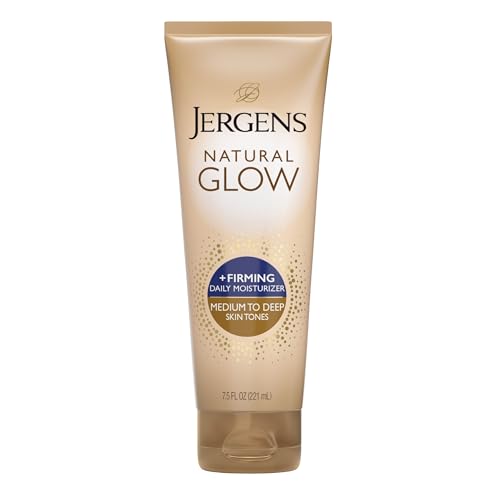
If you are new to self-tanning or if you prefer a subtle, no-commitment glow, Jergens Natural Glow is the gentlest entry point. Dermatologists and consumer testing panels consistently rate it as one of the most beginner-friendly formulas on the market.
You apply it exactly like a regular body lotion, which means it fits seamlessly into a routine you already have. The color builds over a few days rather than developing overnight, so there is plenty of room to adjust if you want more or less depth. It is also one of the most affordable options, widely available at drugstores and online.
Best for Dry Mature Skin: Bondi Sands Self-Tanning Foam
Bondi Sands has earned a devoted following, and tested options from Consumer Reports found it performing impressively across a range of skin tones. What makes it especially friendly for mature skin is the hydrating base. It contains aloe vera and produces a genuine golden-brown result rather than an orange one.
It also offers an ultra-dark shade for those of you who want a deeper, more dramatic glow. The coconut scent is pleasant without being overpowering, which is a nice contrast to the chemical DHA smell that lingers with some formulas.
Best Tanning Drops (Face and Body): Isle of Paradise Self-Tanning Drops
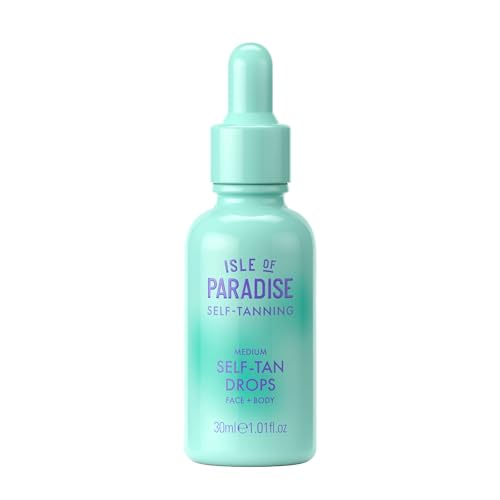
Isle of Paradise tanning drops are a darling among dermatologists who recommend customizable, low-risk options. You control the intensity by adjusting how many drops you mix into your moisturizer. The formula is vegan, cruelty-free, and packed with plant-based ingredients including avocado oil, coconut water, and chia seed oil.
For women over 50 who want to use a self-tanner on the face, tanning drops mixed into your existing serum or moisturizer are one of the safest approaches. You are building color gradually, in a formula your skin already tolerates, with zero commitment if you want to take a break.
Best Luxury Option: Tan-Luxe The Body Illuminating Self-Tan Drops
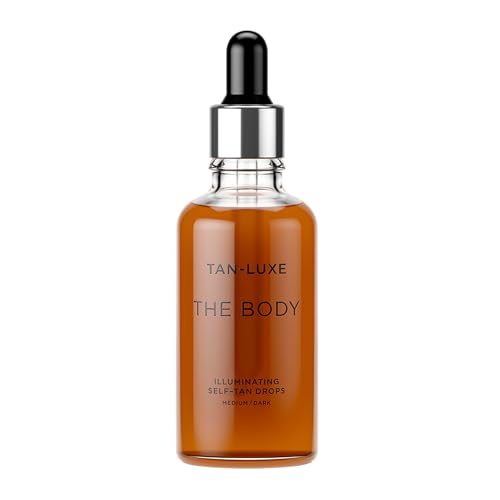
If you are looking for a step up in terms of skin-loving ingredients, Tan-Luxe The Body is consistently praised by dermatologists for the sophistication of its formula. It contains raspberry seed oil and grapeseed oil alongside the DHA, giving you deep moisture while the tan develops.
The drops format means you have complete control over intensity. Mix a few drops into your body lotion and apply like normal. It is a genuinely elegant experience and the results are among the most natural-looking of any self-tanner I have seen reviewed by dermatologists.
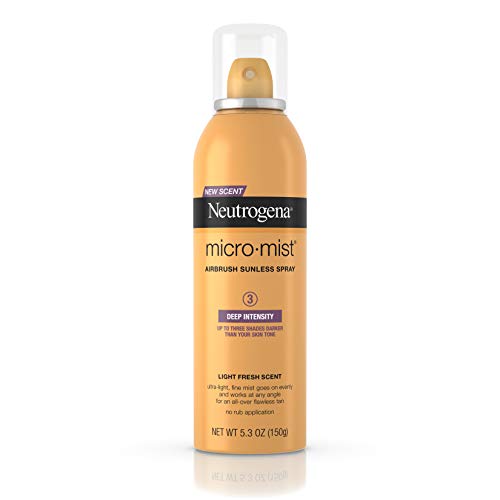
Best Drugstore Pick: Neutrogena Micro-Mist Airbrush Sunless Tan
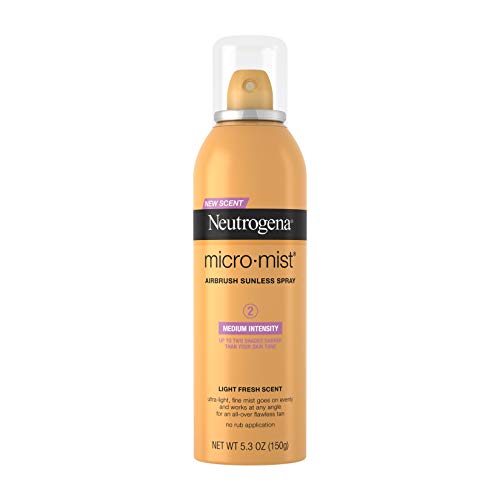
For those who love the convenience of a spray, Neutrogena Micro-Mist consistently earns mention in dermatologist-reviewed roundups as an accessible, affordable option. The fine mist format makes application fast and the color it produces is genuinely natural for a drugstore price point.
Spray outdoors or in a well-ventilated bathroom, and hold the can about six inches from your skin as you spray in sweeping motions. Let it dry fully before getting dressed. It is not the most long-lasting formula on this list, but for its price and availability, it punches well above its weight.
How to Apply Self-Tanner on Mature Skin: A Step-by-Step Guide
The application process honestly makes or breaks your results. Here is how to set yourself up for a streak-free, even glow that looks beautiful on skin over 50.
Step 1: Exfoliate 24 hours before. Use a gentle body scrub or exfoliating mitt the day before you tan, not the same day. You want to remove dead skin cells so the DHA has a fresh, even surface to react with. Concentrate on knees, elbows, ankles, and any other dry, textured areas.
Step 2: Moisturize dry areas before applying. Apply a small amount of plain, fragrance-free moisturizer to your elbows, knees, ankles, and wrists about fifteen minutes before you apply your self-tanner. These areas are drier and will absorb DHA faster, which can make them go darker than the surrounding skin. A light barrier of moisture slows that down.
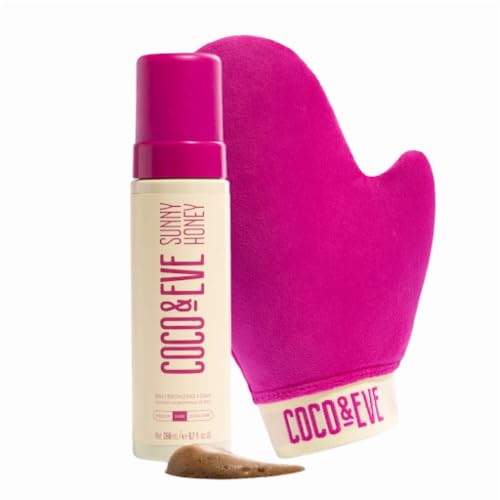
Step 3: Always use a tanning mitt. Never apply self-tanner with your bare hands. A tanning mitt ensures even application and keeps your palms from turning orange. Work in long, sweeping motions and blend well at the wrists, ankles, and hairline.

Step 4: Less is more on the face. If you are using a body self-tanner on your face, apply a very light layer. Better yet, use a dedicated face formula or tanning drops mixed into your moisturizer for more control.
Step 5: Wait before dressing. Give your self-tanner at least ten to fifteen minutes to dry before pulling on clothes. Loose, dark clothing is your best friend for the developing period to avoid any transfer.
Step 6: Do not apply anything for eight hours. After your self-tanner is on, leave it alone. No lotion, no deodorant, no sweating if you can help it. Give the DHA the full developing time it needs.
While you are dialing in your self-tanning routine, it is worth building a solid skincare foundation around it. Our guide to The Ordinary products for mature skin walks you through the best affordable actives that work beautifully with a self-tanning schedule.
What to Avoid When Choosing a Self-Tanner Over 50
Some ingredients and product features that are fine on younger skin can genuinely cause problems on mature skin. Here is my short list of what to steer clear of.
Heavy alcohol bases. Alcohol evaporates quickly but also strips moisture from already-dry skin. Check the ingredient list and avoid formulas where alcohol appears in the first few ingredients.
Very high DHA concentrations without building up. Jumping to the darkest formula immediately is a recipe for uneven, patchy results. Start with a medium shade and build from there.
Formulas with heavy fragrance. Mature skin is more prone to contact dermatitis and irritation. Fragrance-free or lightly scented options are always the smarter choice.
Applying over active skincare. Do not apply self-tanner immediately after using retinol, AHAs, BHAs, or vitamin C. These exfoliating actives can interfere with DHA development and cause patchiness. Wait at least 24 hours after using actives before you tan.
Frequently Asked Questions
Is self-tanner safe for women over 50?
Yes, self-tanners are widely considered one of the safest ways to achieve a bronzed glow at any age. The active ingredient DHA has been approved by the FDA for external use. It reacts only with the outermost layer of dead skin cells and does not penetrate deeper into the skin. Dermatologists consistently recommend self-tanners as the safe alternative to UV tanning, which carries real cancer risk.
Do self-tanners protect you from the sun?
No. This is a crucial point. Self-tanners do not contain SPF and they do not offer any protection from UV radiation. You still need to apply a broad-spectrum sunscreen with SPF 30 or higher whenever you are going outdoors. The two products serve completely different purposes.
Why does self-tanner look patchy on mature skin?
Patchiness on mature skin almost always comes down to one of three things: insufficient exfoliation before applying, dry skin absorbing DHA unevenly, or skipping moisturization on traditionally dry areas like knees and elbows. Follow the prep steps above and you will see a dramatic difference in your results.
How long does self-tanner last on skin over 50?
Most self-tanners last between five and seven days before fading naturally. Because mature skin has a slightly faster cell turnover in some areas, you may find the color fades a little more quickly on areas that are prone to dryness. Moisturizing daily extends the life of your tan noticeably.
Can I use self-tanner on my face?
Yes, but use a product specifically designed for the face or use tanning drops mixed into your existing facial moisturizer. Facial skin is more delicate and more sensitive to fragrance and pore-clogging ingredients. Always patch test on your inner wrist for 24 hours before applying anything new to your face.
What is the difference between a gradual tanner and a regular self-tanner?
A gradual tanner contains a lower concentration of DHA and is designed to be used daily, building color slowly over several applications. A regular self-tanner is used once and develops to full color within eight hours. Gradual tanners are more forgiving and better for beginners or anyone who wants subtle, natural-looking color. Regular self-tanners give you faster, more dramatic results with a single application.
Does self-tanner smell bad?
The characteristic DHA smell is real, but modern formulas have come a long way. Many of the products on this list have light, pleasant scents that largely mask the DHA odor. The smell is also most noticeable during development and tends to fade once the tan has fully set.
The Bottom Line
Gorgeous, glowing skin in your fifties is absolutely within reach, and you do not need a single UV ray to get there. The best self-tanner dermatologist recommended formulas combine skin-safe DHA with nourishing, hydrating ingredients that work beautifully on mature skin. The key is choosing the right format for your lifestyle, prepping your skin properly, and building your color gradually.
My personal starting recommendation for most women over 50 is either the Jergens Natural Glow lotion for a gentle, beginner-friendly start or the St. Tropez Classic Bronzing Mousse for anyone who wants a reliable, dermatologist-praised result right from the first application.
You deserve to feel radiant in your skin at every age. A beautiful, safe glow is one simple step away.
And once that gorgeous glow is locked in, you are going to want to show it off. Our guide to the best bikinis for women over 50 has flattering, confidence-boosting styles made for exactly this moment.
About the author

Claudia Faucher is a fitness and lifestyle blogger who shares practical tips for women over 50 on staying active, stylish, and confident. As the creator of FitFab50.com and Beyond59.com, she covers topics like workout gear, beauty trends, and wellness routines. Claudia is passionate about helping others live their best life at any age.
Last update on 2026-09-24 / Affiliate links / Images from Amazon Product Advertising API