
Can a 70-year-old build muscle with weights? Yes, and the evidence for it is stronger than most people realize.
The idea that muscle growth stops at 70 is one of the most persistent myths in fitness. After more than 30 years working with older adults, I have seen it hold people back more than any injury or health condition ever has. People in their 70s show up to the gym convinced their biology has written them off. The research says otherwise.
Muscle tissue responds to resistance training well into your eighth decade of life. The process is slower, the gains are more modest, and the recovery window is longer than it was at 40. But the fundamental mechanism, progressively loading muscle to stimulate growth and adaptation, still works.
This guide covers what the science actually shows, sets realistic expectations for timelines and gains, and explains how pairing training with the right nutrition support accelerates results.
What the Research Says About Building Muscle at 70
The science on this question has grown substantially over the past two decades, and the findings consistently point in the same direction.
A 2019 meta-analysis published in Medicine and Science in Sports and Exercise reviewed 49 studies on resistance training in adults aged 60 to 80. Every age group studied showed significant gains in lean muscle mass. That includes adults over 70. The researchers identified three variables that determined how much muscle older adults gained: training frequency, load, and protein intake.
A separate study from the University of Oklahoma found that untrained men in their 60s and 70s who completed 12 weeks of resistance training gained an average of 2.4 pounds of lean mass, which closely matched gains seen in younger adult beginners following the same protocol.
Here is the finding that matters most: muscle hypertrophy in older adults is limited primarily by training stimulus and protein availability, not age.
The biology is slower. The ceiling is lower. But the door is open.
Why Muscle Growth Slows After 70, and Why It Still Happens
Understanding what changes after 70 helps set accurate expectations. It also explains why nutrition and training structure matter more at this age than at any other.

Anabolic resistance is the main obstacle. After 70, muscle tissue becomes less sensitive to the protein signals that trigger growth. You need more dietary protein per pound of body weight to produce the same muscle protein synthesis response that a 35-year-old gets from a smaller amount. This is not a barrier. It is a variable you can manage.
Testosterone and growth hormone levels decline with age, reducing the hormonal environment that supports rapid muscle building. This is why gains at 70 are more modest than gains at 30. It does not mean gains are absent. It means your expectations need to be calibrated accurately.
Satellite cell activity slows down after 65. Satellite cells are the repair and growth cells attached to muscle fibers. They respond to training damage by fusing with muscle fibers to make them thicker. The response time slows with age, which is why recovery between sessions takes longer.
None of these factors eliminate muscle growth. They moderate it. The men and women I have worked with in their 70s who train consistently, eat enough protein, and give their bodies adequate recovery time make genuine, measurable progress every single month.
What Realistic Muscle Gains Look Like at 70
Setting accurate expectations is the most important thing I can do for someone starting at 70. Unrealistic expectations lead to discouragement. Calibrated expectations lead to consistency.
Here is what the research and my own experience suggest you can realistically expect.
In the first 4 to 6 weeks: Most gains will be neural, not muscular. Your nervous system learns to recruit more motor units more efficiently. You will feel stronger and move better before you look different. This is real progress, even if the mirror does not show it yet.
By weeks 8 to 12: Genuine hypertrophy begins. Research suggests most trained adults over 70 can expect to add 1 to 2 pounds of lean mass in a 12-week training block. That may sound modest. In functional terms, 1 to 2 pounds of muscle on a 70-year-old body meaningfully improves daily strength, balance, and fall resistance.
By 6 months of consistent training: Accumulated lean mass gains of 3 to 5 pounds are achievable with solid programming and adequate protein. Functional improvements, things like getting up from a chair without using your hands, carrying groceries without stopping, walking upstairs without gripping the railing, are often more dramatic than the scale suggests.
The benchmark is not a 25-year-old bodybuilder. The benchmark is your own baseline at the start of training.
The Role of Protein in Building Muscle After 70
Training is the stimulus. Protein is the raw material. Without enough of it, your muscles cannot rebuild after a workout, regardless of how well you trained.
The current research consensus, supported by work from the International Society of Sports Nutrition, recommends that adults over 65 who are actively resistance training consume 1.2 to 1.6 grams of protein per kilogram of body weight per day. For a 175-pound (79 kg) man, that works out to roughly 95 to 125 grams of protein daily.
Most adults over 70 fall well short of this range on a standard diet.
The distribution matters too. Research by Dr. Stuart Phillips at McMaster University found that spreading protein intake evenly across three to four meals produces better muscle protein synthesis than front- or back-loading it. Aim for 30 to 40 grams of protein at each main meal, rather than eating most of it at dinner.
Whole food sources first: eggs, chicken, fish, Greek yogurt, cottage cheese, legumes. When whole food intake falls short, which it often does after 70 as appetite decreases, a high-quality protein supplement fills the gap without adding excess calories.
For a detailed breakdown of the best options for older adults, see my guide to protein powder for seniors who do not want to bulk up. And for the specific question of daily protein limits and safety after 50, see my protein powder safety guide.
How Creatine Accelerates Muscle Building After 70
If protein is the raw material, creatine is the catalyst that makes training more productive.
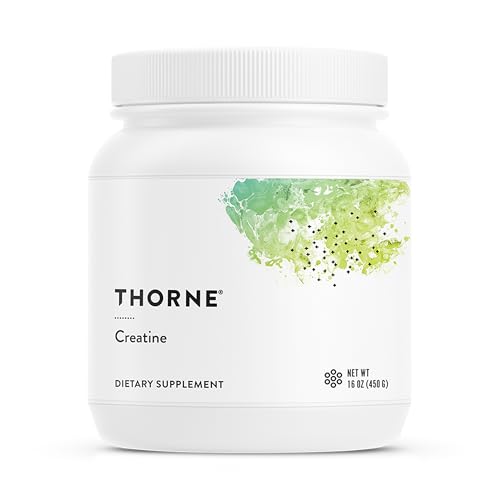
Creatine monohydrate increases the availability of phosphocreatine in muscle tissue, which fuels short, high-intensity efforts like a set of resistance training. More available energy during each set means you can complete more quality reps before fatigue forces you to stop. More quality reps per session means a stronger training stimulus. A stronger stimulus, combined with adequate protein, means faster and more consistent muscle gains.
A 2022 study published in the Journal of Strength and Conditioning Research examining adults aged 60 to 75 found that creatine supplementation combined with resistance training produced 18 percent greater strength gains than exercise alone, with the most pronounced effects in participants over 65.
For adults over 70 specifically, creatine stores in muscle tissue decline by 8 to 12 percent per decade after age 50. Supplementation fills that gap more effectively in older adults than in younger ones, which is part of why the research consistently shows older populations responding well to creatine.
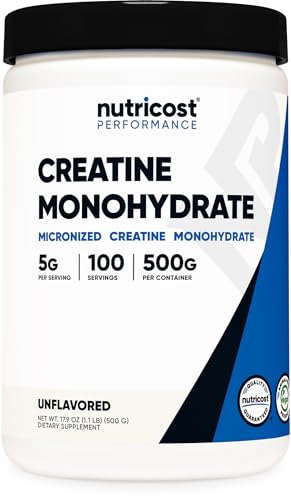
The standard protocol for older adults is 3 to 5 grams of creatine monohydrate daily, taken consistently. No loading phase required. For a full breakdown of brands, dosing, and what to look for, see my best creatine for seniors guide.
The FitFab50 Framework for Building Muscle at 70
After working with adults in their 70s for years, I have found that those who make consistent progress follow a straightforward approach. It is not complicated. What makes it work is executing the basics reliably every week.
Train 2 to 3 Days Per Week, Not More
Recovery capacity at 70 is the limiting factor, not training motivation. Two to three full-body sessions per week with 48 hours of rest between sessions gives your muscles time to rebuild before you load them again. More frequent training does not produce faster gains at this age. It produces slower recovery and higher injury risk.
Focus on Compound Movements
Isolation exercises have their place, but compound movements, those that work multiple muscle groups at once, give you more return per training minute and better transfer to real-world strength. Squats, hip hinges, chest presses, rows, and loaded carries should anchor every session.
Use Moderate Loads and Higher Reps
The research is clear on this point for older adults: training in the 10 to 20 repetition range at 60 to 75 percent of your maximum produces equivalent muscle growth to lower-rep, heavier training, with substantially less joint stress and injury risk. Leave 2 to 3 reps in reserve at the end of each set. You do not need to train to failure to build muscle.
Progress the Load Every 2 to 3 Weeks
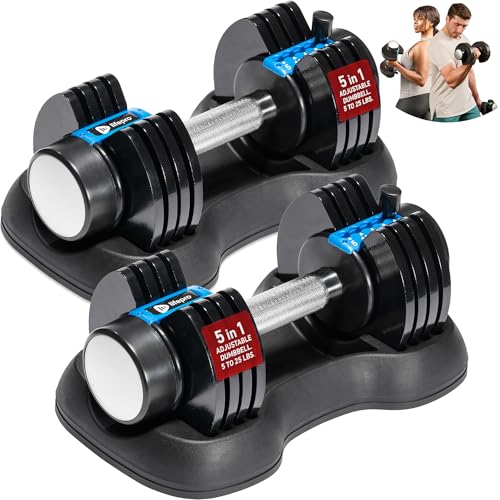
Progressive overload is non-negotiable. If you lift the same weight for the same reps every week, your muscles adapt and stop growing. When a weight feels manageable for all sets with good form, increase it by 2 to 5 percent. Adjustable dumbbells make this kind of incremental progression straightforward at home. See my beginner strength training roadmap for adults over 60 for a full 12-week progression plan.
Prioritize Sleep
Growth hormone, which drives muscle repair and growth, is released primarily during deep sleep. Adults over 70 who consistently get 7 to 8 hours of quality sleep build muscle measurably faster than those getting 5 to 6 hours. Sleep is not passive recovery. It is where the muscle actually grows.
What to Do First
If you are just getting started at 70, do not try to do everything at once. The single most effective first step is establishing a consistent training habit before worrying about optimizing any other variable.

Two sessions per week. Five basic exercises. Weights light enough that your form stays clean for every rep. That is all the complexity you need in month one.
Once the habit is in place, add protein tracking. Once protein is dialed in, consider adding creatine. Build one layer at a time.
My 5 exercises to do every day for over 60 guide is a useful starting point if you want low-intensity daily movement to complement your two to three weekly lifting sessions. And if the question of safety is still on your mind before you start, see my companion article on whether it is safe to lift weights at 65.
The Bottom Line
Can a 70-year-old build muscle with weights? Yes, consistently, measurably, and with meaningful functional payoff.
The gains are more modest than at younger ages. The timeline is longer. The recovery window is wider. None of that changes the fundamental answer.
The research is settled. The mechanism works. What determines whether a 70-year-old builds muscle is not their age. It is whether they train consistently, eat enough protein, and give their body adequate time to recover.
Start with two sessions per week. Get your protein intake to 1.2 grams per kilogram of body weight per day. Add creatine once the training habit is established. Track your functional improvements, not just the scale.
The people who told you it was too late to build muscle at 70 were wrong.
Medical Disclaimer: This content is for educational and informational purposes only. It is not intended as a substitute for professional medical advice, diagnosis, or treatment. Consult your physician before beginning any new exercise program, especially if you have existing health conditions or take prescription medications.
About the author

Rick Huey is a fitness writer who has dedicated his life to living an active lifestyle. With more than 30 years of experience in the fitness industry, Rick is a respected contributor for FitFab50.com, where he shares his wealth of knowledge with a wide audience. His dedication to promoting the benefits of living an active lifestyle has inspired many people to pursue their own fitness journeys with enthusiasm and dedication.
Last update on 2026-08-25 / Affiliate links / Images from Amazon Product Advertising API