
Is it safe to lift weights at 65? The short answer is yes.
For most adults, not lifting weights is the riskier choice.

After more than 30 years in the fitness industry, the question I hear most from men and women over 60 is some version of this: am I too old, too stiff, or too far gone to pick up a weight? The answer is almost always no. What I have seen over and over is that the people who stay the strongest and most independent into their 70s and 80s are the ones who kept lifting, or started lifting, after 60.
That might sound backwards. The cultural message after 60 is to slow down and stick to walking. But decades of research say otherwise. Strength training after 65 reduces fall risk, preserves bone density, fights muscle loss, and keeps you independent longer.
The question is not whether you should lift. It is how to do it right.
This guide breaks down the actual risks, who needs medical clearance first, what conditions require extra care, and how to start safely, whether you have never touched a weight in your life or are returning after years away.

What the Research Says About Weight Lifting at 65
The evidence is consistent and has been building for over three decades. A 2019 review titled “Association of Resistance Exercise With the Incidence of Hypercholesterolemia” published in the British Journal of Sports Medicine found that resistance training in adults over 60 significantly reduced all-cause mortality risk.

Separate research from the National Institute on Aging confirms that older adults who strength train two or more days per week maintain better functional capacity, balance, and independence than sedentary peers.
Here is the key finding that surprises most people: muscle tissue responds to resistance training at 65, 70, and even 85.
Older adults build muscle more slowly than younger people, and they do not build as much of it. But the muscle responds. The mechanism still works.
The real danger at 65 is sarcopenia, the age-related loss of muscle mass that begins in your 40s and accelerates after 60. Left unchecked, sarcopenia leads to weakness, falls, fractures, and loss of independence. Lifting weights is the single most effective intervention against it.

If you want to understand how sarcopenia affects strength and what you can do about it nutritionally, see my guides on protein powder for seniors and creatine safety for older adults.
Who Should See a Doctor Before Starting
Most healthy adults can begin a moderate weight training program without a formal medical exam, according to current guidelines from the American College of Sports Medicine. However, you should consult your doctor before lifting weights at 65 if any of the following apply to you.
Get clearance if you have:
- Uncontrolled high blood pressure (above 160/100)
- A recent heart attack, cardiac procedure, or active heart disease
- Severe osteoporosis with a history of fragility fractures
- A recent joint replacement (within the past 6 to 12 months)
- Unstable angina or chest pain during exertion
- Poorly controlled diabetes
- A hernia that has not been surgically repaired
- Chronic kidney disease at stage 3 or higher
A simple conversation with your physician is all it takes. Tell them you want to start light resistance training two to three days per week. In most cases, they will encourage it. Many will write it into your care plan.
If you have had cardiac bypass surgery or a recent stroke, ask for a referral to a cardiac or physical rehabilitation program first. These programs fold strength training into supervised exercise plans designed specifically for your recovery and condition.
Common Concerns, Addressed Directly
“Won’t lifting weights hurt my joints?”
This is the most common fear, and it is based on a misunderstanding. Strength training done correctly does not damage healthy joints. It strengthens the muscles, tendons, and ligaments that support those joints.
People with knee pain or hip arthritis often feel better after beginning a progressive resistance program, not worse, because stronger surrounding muscles take load off the joint surface itself.
The caveat is form and load. Lifting too heavy, too fast, with poor mechanics is what causes joint problems. Starting light and learning the movement patterns correctly eliminates most of that risk.
If joint pain has you hesitant to start, my guide to low-impact exercises for seniors with bad knees covers a gentle entry point that builds the same supporting muscles without high-load stress on your joints.
“I have osteoporosis. Is it safe for me to lift?”
Weight-bearing and resistance exercise is actually prescribed for osteoporosis. The loading stress of lifting signals bone tissue to rebuild, which helps slow density loss over time. The National Osteoporosis Foundation recommends strength training as a first-line intervention.
You will want to avoid exercises that place heavy load on a rounded spine, like traditional crunches or unsupported bent-over rows. But a modified program is both safe and beneficial for most people with osteoporosis.
“I’ve never lifted weights before. Is it too late to start?”
No.
Research consistently shows that previously sedentary adults in their 60s and 70s respond to resistance training. A 2017 study titled “Effects of Resistance Training on Older Adults” published in Medicine and Science in Sports and Exercise found that untrained adults over 60 who completed a 12-week strength program gained meaningful lean mass and significantly improved functional strength.
Starting late is not ideal. It is far better than not starting.
If you are brand new to exercise, my 7-day fitness kickstart for beginners over 50 is a gentle on-ramp that builds the movement habits you will need before adding resistance.
“What if I get injured?”
Injury risk in properly structured beginner weight training programs is low, lower than jogging, recreational sports, and many activities people consider safe. The highest-risk period is the first few weeks, when your body is learning movement patterns and adapting to load.
Starting lighter than you think you need to, focusing on form, and progressing gradually are the three things that keep that risk near zero.
The Actual Risks, and How to Manage Them
Is it safe to lift weights at 65? Yes, with these four specific risks on your radar.

Cardiovascular Stress During Maximal Exertion
Very heavy lifting, sets of 1 to 3 repetitions at near-maximum weight, produces a sharp spike in blood pressure. For older adults, especially those with any cardiovascular history, this range is unnecessary and best avoided.
Training in the 10 to 20 repetition range at moderate loads produces the same muscle-building signal with far less strain on the heart and vascular system.
Delayed-Onset Muscle Soreness (DOMS)
After 65, DOMS lasts longer. What takes a 30-year-old 24 hours to clear may take you 48 to 72 hours.
This is normal. It is not a sign that you are too old to train. It means you need to build in adequate recovery time, typically 48 hours between sessions working the same muscle groups.
Poor Form Under Fatigue
Technique breaks down when you are tired. For older lifters, a form breakdown under load carries a higher injury risk than it does for younger adults, whose connective tissue bounces back faster.
Stop a set when form degrades. No exception.
Over-Reliance on Machines Without Learning Movement Patterns
Machines are not inherently safer. An incorrectly set cable machine or leg press can load your joints just as badly as free weights used with poor form.
Learn the fundamental movement patterns, squat, hinge, push, pull, before adding significant load, regardless of the equipment you use.
How to Start Safely at 65: The FitFab50 Approach
In my experience, the lifters over 65 who stay injury-free and make consistent progress share one thing: they follow a simple, repeatable framework rather than copying what 35-year-olds do in the gym. Here is the approach I recommend.

Step 1: Start Lighter Than You Think You Need To
The biggest mistake new older lifters make is starting too heavy. Your cardiovascular system and nervous system adapt faster than your tendons and ligaments.
Starting at 50 to 60 percent of what you think you can lift for the first two weeks lets your connective tissue catch up without putting it under excessive stress.
Step 2: Prioritize the Big Movement Patterns
You do not need a 20-exercise program. Focus on five foundational movements:
- Squat pattern (chair squats, goblet squats, leg press)
- Hip hinge (Romanian deadlifts, hip thrusts, cable pull-throughs)
- Horizontal push (chest press, wall push-ups, dumbbell press)
- Horizontal pull (seated row, dumbbell row, resistance band row)
- Carry (farmer’s carry with dumbbells or loaded walking)
Two to three sets of 10 to 15 repetitions per movement, two to three times per week, is a complete and effective program for a beginner at 65.
Step 3: Warm Up Properly
Cold muscles and connective tissue are more injury-prone. Spend 5 to 10 minutes on light movement before picking up any weight.
Bodyweight squats, arm circles, hip hinges without load, and light band work are all effective. A proper warm-up is not optional after 65.
Step 4: Use Equipment That Lets You Progress Gradually
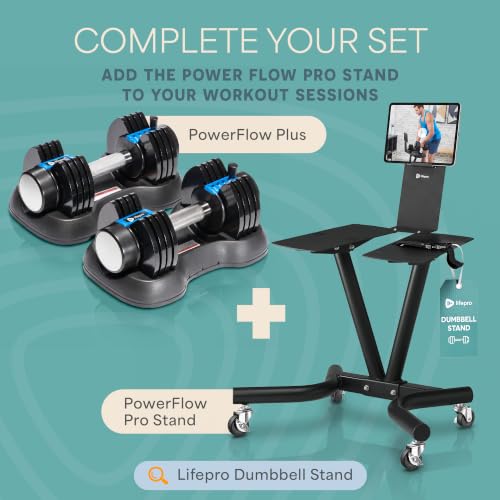
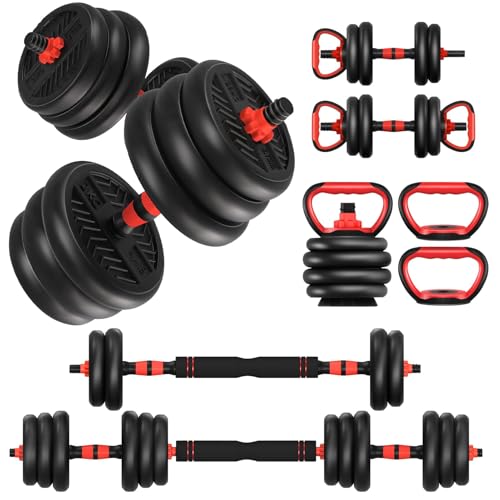
One of the reasons adjustable dumbbells are particularly useful for older lifters is that they let you increase weight in small increments, often as little as one to two pounds at a time.
That kind of fine-tuned progression is not possible with fixed-weight sets. AAWP: Best Adjustable Dumbbells for Seniors If dumbbells feel intimidating at first, resistance bands are a legitimate alternative, joint-friendly and very low risk for beginners.

Step 5: Progress Slowly and Consistently
The goal in the first month is not to get strong. It is to build the habit, learn the movements, and give your connective tissue time to adapt.
Increase weight only when you can complete all sets and reps with good form and without excessive soreness. For most older adults, that means adding resistance every two to three weeks, not every session.

Where to Go From Here
If you are new to strength training or returning after a long break, start with the foundational movements above before adding complexity. My beginner strength training roadmap for adults over 60 walks through the first 12 weeks in detail, including how to progress and what to track.
For daily movement that complements lifting and keeps you mobile on off days, see my guide to 5 exercises to do every day for over 60. These are low-intensity movements that support recovery without interfering with your lifting sessions.
The Bottom Line
Is it safe to lift weights at 65? For the vast majority of adults, yes, and it is one of the most important things you can do for your long-term health and independence.
The risks are real but manageable. Start lighter than you think you need to. Learn the movement patterns before chasing load. Get medical clearance if you have a cardiac or orthopedic history.
Build in adequate recovery time.
The risk you cannot manage is doing nothing. Sarcopenia, falls, fractures, and the loss of independence that follows, those are the outcomes that weight training actively works against.
Start with two sessions per week. Learn the five foundational movements. Add load gradually.
The research is clear: it is not too late, and it is not too risky. It is one of the best decisions you can make at 65.
Medical Disclaimer: This content is for educational and informational purposes only. It is not intended as a substitute for professional medical advice, diagnosis, or treatment. Consult your physician before beginning any new exercise program, especially if you have existing health conditions or take prescription medications.
About the author

Rick Huey is a fitness writer who has dedicated his life to living an active lifestyle. With more than 30 years of experience in the fitness industry, Rick is a respected contributor for FitFab50.com, where he shares his wealth of knowledge with a wide audience. His dedication to promoting the benefits of living an active lifestyle has inspired many people to pursue their own fitness journeys with enthusiasm and dedication.
Last update on 2026-10-15 / Affiliate links / Images from Amazon Product Advertising API