If you have dry, sensitive, or post-menopausal skin and every sunscreen you try looks chalky, settles into your lines, or leaves you looking ashy by midday, this guide is written for you specifically.
Let me tell you something I hear from women in my community all the time: “Claudia, I finally found a sunscreen I love but it makes me look like I dusted my face with chalk.” Sound familiar?
I spent the better part of two years hunting for the best face sunscreen for women over 60 that actually disappears into skin the way it’s supposed to. Not the kind that photographs gray, not the kind that settles into lines and makes them look deeper, and definitely not the kind that turns your complexion into something resembling a ghost costume.
I’ve narrowed it down to the 8 best options on the market right now, tested and researched with dry, mature, and sensitive skin in mind.
The good news? They exist. And once you know what to look for, you will never go back to your old formula.

If you are already dealing with sun spots or texture changes, check out my guide to 9 Best Products For Sun Damaged Skin On Face for a full treatment plan that pairs beautifully with daily SPF.
Quick Picks: Best Face Sunscreen for Women Over 60
| Best For | Product | SPF |
|---|---|---|
| Best overall | EltaMD UV Elements Tinted | SPF 44 |
| Best for redness / hyperpigmentation | La Roche-Posay Anthelios Mineral Tinted | SPF 50 |
| Best invisible finish | Supergoop! Unseen Sunscreen | SPF 40 |
| Best budget drugstore pick | Neutrogena Sheer Zinc Dry-Touch | SPF 50 |
| Best for damaged skin barrier | CeraVe Hydrating Mineral Tinted | SPF 50 |
| Best for actinic keratosis | Isdin Eryfotona Actinica | SPF 50+ |
| Best for reapplication over makeup | Colorescience Brush-On Shield | SPF 50 |
| Best clean beauty pick | Australian Gold Botanical Tinted | SPF 50 |
Why Face Sunscreen Is Different After 60
Your skin in your 60s is not the same skin you had in your 40s. Estrogen levels have dropped significantly for most of us, which means our skin holds less water, produces less natural oil, and becomes noticeably thinner. SPF for menopausal skin carries a unique set of requirements that most mainstream sunscreens simply are not designed to meet. Here is what those hormonal changes mean in practical terms:
- Dryness is amplified. A sunscreen that felt comfortable in your 50s may now feel tight or flaky by midday.
- Texture reads differently. Fine lines and larger pores can cause some formulas to separate, pill, or look patchy.
- The white cast problem is worse. Thinner, drier skin tends to show white cast and ashy residue far more than oilier or plumper skin.
- Sensitivity increases. Many women develop new sensitivities in their 60s to fragrances and chemical UV filters.
These are all solvable problems, but they do mean you need to be more selective than you were a decade ago. The delicate skin around your eyelids is also especially vulnerable at this stage. My guide to the 9 Best Sunscreen for Eyelids covers formulas gentle enough for that sensitive zone.
What Causes the Chalky or Ashy Look?
The chalky white cast on mature skin almost always comes down to one thing: zinc oxide. Zinc oxide is the gold standard UV filter for older skin because it protects against both UVA and UVB rays, sits on top of skin rather than absorbing into the bloodstream, and is gentle enough for rosacea and eczema. But traditional zinc oxide formulas were thick and white, and they showed on every skin tone darker than porcelain.
The good news is that sunscreen technology has improved dramatically. Modern formulas use micronized or nano-sized zinc oxide particles that are far less visible. Tinted mineral sunscreens add iron oxides that neutralize the white cast and actually improve coverage for hyperpigmentation. Hybrid formulas combine a lower percentage of zinc with chemical filters for a lighter feel.
Here is a quick way to think about your options:
- Pure mineral (zinc oxide/titanium dioxide): Best for sensitive skin, but pick tinted versions to avoid white cast.
- Chemical UV filters (avobenzone, octinoxate): Invisible finish but may irritate sensitive or rosacea-prone skin.
- Hybrid formulas: Combine lower mineral and chemical percentages for a more wearable result.
- Tinted mineral: The best of all worlds for most women over 60 who want coverage, protection, and no ghost face.
If you prefer a tinted formula that doubles as light coverage, my roundup of the 11 Best Tinted Moisturizers With SPF for Mature Skin gives you products that hydrate, protect, and color-correct in one step.
What to Look for in the Best Face Sunscreen for Women Over 60
Here are the features I personally look for when recommending a face sunscreen for women over 60 with dry or sensitive skin:
- SPF 30 minimum, SPF 50 preferred. SPF 30 blocks about 97% of UVB rays; SPF 50 blocks about 98%. The difference is small, but for skin that already has years of sun exposure, that extra margin matters.
- Broad spectrum. This means protection from both UVA (aging rays) and UVB (burning rays). Always look for these two words on the label.
- Hydrating base ingredients. Look for hyaluronic acid, glycerin, ceramides, or niacinamide. These keep the formula — whether a best drugstore sunscreen for mature skin or a premium pick — from settling into lines or caking on crepey skin.
- Fragrance-free. Fragrance is a leading cause of contact dermatitis, and mature skin is more vulnerable.
- No white cast or low-cast formula. Look for “tinted,” “sheer,” “clear,” or “transparent” on the packaging.
- Non-comedogenic. Even if breakouts are rare for you, clogged pores can cause dullness and milia.
- Lightweight enough not to pill. A sunscreen that doesn’t pill under makeup is non-negotiable for women who layer foundation or tinted products on top. Avoid thick, waxy formulas and look for words like “fluid,” “gel,” or “weightless” in the description.
A Note on Skin Tone
The white cast and ashy finish problem is not equal across skin tones — it is significantly worse for women with medium, deep, and dark complexions. If you are searching for a sunscreen for mature dark skin without white cast, the untinted mineral formulas on this list are not your best friends.
Prioritize the tinted picks instead: La Roche-Posay Anthelios Tinted, EltaMD UV Elements Tinted, and the Colorescience Brush-On Shield. The iron oxides in tinted formulas do the heavy lifting of neutralizing that gray-white tone that standard zinc oxide leaves behind. The Colorescience brush-on is especially worth noting for deeper complexions because it comes in multiple shades you can match precisely to your skin.

The 8 Best Face Sunscreens for Women Over 60 (No Chalky Finish)
These are the formulas I have personally tested or thoroughly researched, with a focus on finish, skin feel, and how they perform on mature, drier skin tones across the spectrum.
1. EltaMD UV Elements Tinted Broad-Spectrum SPF 44
Best for: Sensitive skin, rosacea, and women who want SPF plus a primer-like base.
EltaMD is the sunscreen dermatologists recommend most often, and for good reason. The UV Elements formula uses a combination of zinc oxide and titanium dioxide for full-spectrum mineral protection, but the real difference is the tint. The universal tint neutralizes the white cast and gives a natural, skin-like finish that works across fair to medium skin tones.
Packed with hyaluronic acid for dry mature skin, this formula keeps your complexion from feeling tight or cakey even on the driest days. It works beautifully under foundation or on its own for lighter coverage days. What I love most: it does not emphasize pores or texture, which is a huge deal after 60 when skin can look crepey with the wrong formula. It also sits perfectly flat under powder or foundation without pilling — a problem that plagues so many other face SPFs.
SPF: 44 | Finish: Satin | Coverage: Light | Formula: Mineral (tinted)
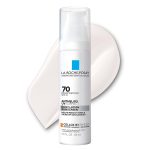
2. La Roche-Posay Anthelios Mineral SPF 50 Tinted Sunscreen
Best for: Women with hyperpigmentation, uneven tone, or redness who want SPF 50 protection.

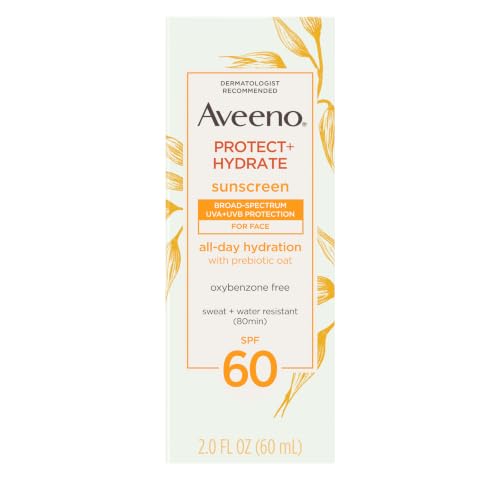
La Roche-Posay is a French pharmacy brand with a long history in dermatology, and the Anthelios Mineral Tinted formula earns its reputation. This SPF 50 uses 25% zinc oxide with iron oxides to provide real broad-spectrum protection without any white residue.
The non-greasy tinted sunscreen for aging skin finish is genuinely impressive. It blurs texture, diffuses light, and gives skin a healthy, even tone without looking like you applied anything heavy. Women with redness or rosacea find this particularly effective because the tint neutralizes ruddiness rather than sitting on top of it. It is also water-resistant for 80 minutes, making it a smart choice if you are active outdoors or spending time near water.
SPF: 50 | Finish: Soft matte | Coverage: Light-medium | Formula: Mineral (tinted)
3. Supergoop! Unseen Sunscreen SPF 40
Best for: Women who want a completely invisible, makeup-gripping base under foundation.
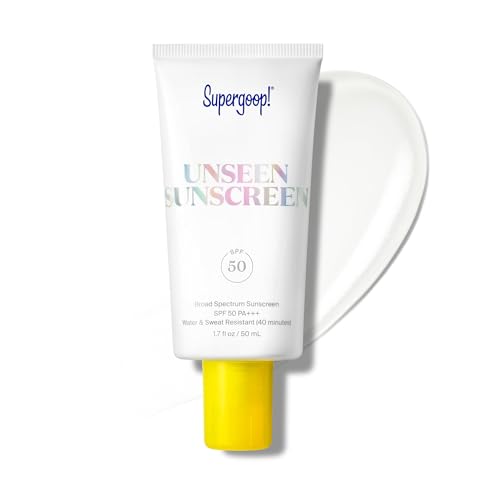
If you have ever complained that sunscreen makes your makeup slide off by noon, the Supergoop! Unseen Sunscreen with primer finish is your solution. This chemical formula is literally invisible on skin. It goes on as a silky, grip-creating base that makes makeup last longer, not shorter.
A quick note on the SPF 40 rating: yes, it is slightly lower than the SPF 50 on most of these picks. But here is the honest truth — the best sunscreen is the one you will actually reapply. Because this formula disappears so completely and feels so comfortable, women who have abandoned every other sunscreen tend to stick with this one. Consistent wear of SPF 40 beats inconsistent wear of SPF 50 every single time.
It is a chemical formula rather than mineral, which means it is not ideal for reactive or rosacea-prone skin. But for women whose primary complaint is white cast or texture, this is one of the most elegant solutions on the market. It is fragrance-free, vegan, and reef-safe. If you are sensitive to chemical UV filters like oxybenzone or octinoxate, check the ingredient list before purchasing.
SPF: 40 | Finish: Invisible/primer | Coverage: None | Formula: Chemical
4. Neutrogena Sheer Zinc Dry-Touch Face Sunscreen SPF 50
Best for: Budget-conscious women who want reliable mineral protection without a pharmacy price tag.
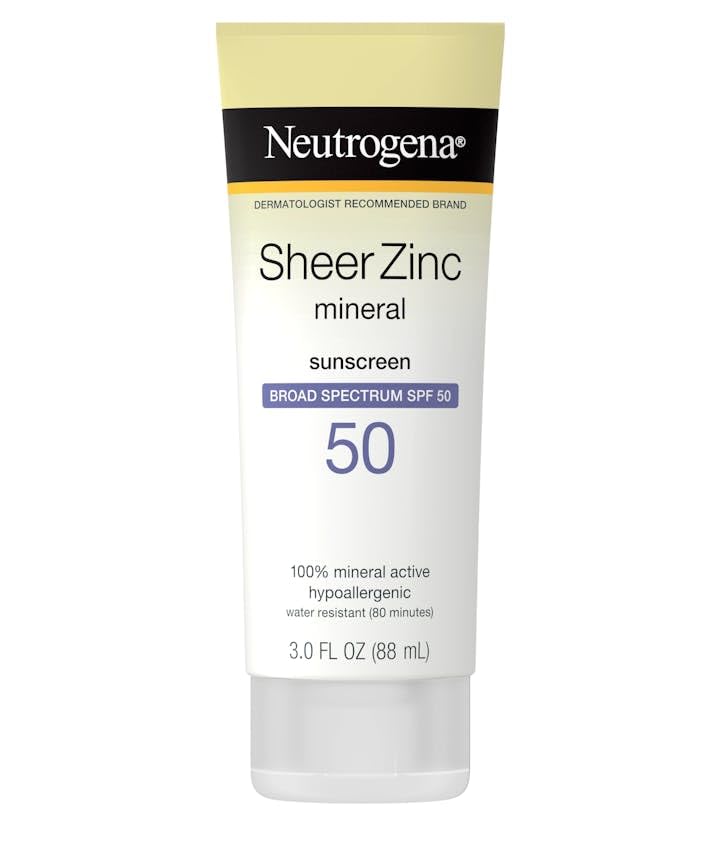
This is the best drugstore sunscreen for mature skin when you want mineral-only protection at a price point that encourages generous, no-guilt reapplication. The zinc oxide formula uses Dry-Touch technology to reduce the greasy feel common in many mineral sunscreens. It is also oxybenzone-free and fragrance-free, which makes it a solid choice for reactive skin.
At under $15, this is the formula I tell budget shoppers to try first. The main limitation: it works best on fair to light-medium skin tones. Deeper skin tones may still notice some ashiness. If that is a concern, go with a tinted option from this list.
SPF: 50 | Finish: Matte | Coverage: None | Formula: Mineral
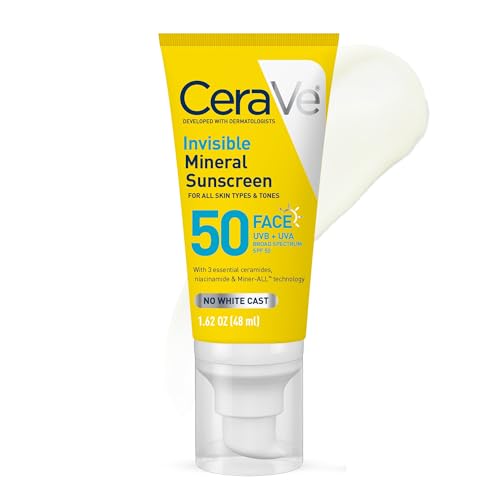
5. CeraVe Hydrating Mineral Sunscreen SPF 50 Face Sheer Tint
Best for: Women with a damaged or compromised skin barrier, including those using retinol or exfoliating acids.

The CeraVe SPF 50 for dry aging skin brings three types of ceramides and hyaluronic acid into a formula that is both protective and deeply nourishing. The ceramides specifically help restore and maintain the skin barrier, which becomes increasingly important after 60 when our natural ceramide production slows. The sheer tint does an excellent job of eliminating white cast, and the hydrating formula keeps sunscreen from settling into crepey skin the way so many lightweight formulas do.
This is the formula I recommend to women who are just starting retinol or acid exfoliants and need extra barrier support alongside their SPF. For more on how serums fit into your morning routine, see my article on the best time to apply wrinkle serum for step-by-step guidance on layering active ingredients under SPF.
SPF: 50 | Finish: Hydrated/satin | Coverage: Sheer | Formula: Mineral (tinted)
6. Isdin Eryfotona Actinica SPF 50+ Mineral Sunscreen
Best for: Women with a history of actinic keratosis, significant sun damage, or who see a dermatologist regularly.
The Isdin Eryfotona mineral sunscreen for actinic keratosis is in a category of its own. This 100% mineral formula is approved by dermatologists specifically for patients with a history of sun-related skin lesions. It contains DNA Replisome, a photolyase enzyme derived from plankton that actually helps repair UV-induced DNA damage while protecting against new damage. That is not marketing fluff — clinical studies show measurable reduction in actinic keratosis lesions with consistent use over several months.
The finish is elegant: lightweight, nearly invisible, with a slight dewy quality that reads beautifully on drier mature skin. If you are dealing with pre-cancerous skin lesions or have been told to monitor rough patches, my guide to 11 Best Products for Actinic Keratosis Treatment at Home pairs naturally with this sunscreen as part of a comprehensive treatment plan.
SPF: 50+ | Finish: Lightweight/dewy | Coverage: None | Formula: Mineral
7. Colorescience Sunforgettable Total Protection Brush-On Shield SPF 50
Best for: Women who need to reapply over makeup throughout the day without messing up their look.

Reapplication is one of the biggest challenges with daily SPF use, and the Colorescience brush-on SPF 50 for reapplication over makeup solves this beautifully. It is a loose mineral powder that sweeps on over foundation, blush, and concealer without disturbing anything underneath. The formula uses iron oxides along with zinc oxide and titanium dioxide for full protection plus a light tint that adds a polished, photo-ready finish. Several shades are available — this is the pick I specifically recommend for women with medium to deep complexions because the shade range actually matches.
It is water and sweat resistant, making it practical for the active women in our community. Keep it in your bag and sweep it on every two hours when you are spending time outdoors.
SPF: 50 | Finish: Soft focus/matte | Coverage: Light | Formula: Mineral powder
8. Australian Gold Botanical Mineral Sunscreen Tinted Face Lotion SPF 50
Best for: Women who prefer clean beauty formulas at a mid-range price point.
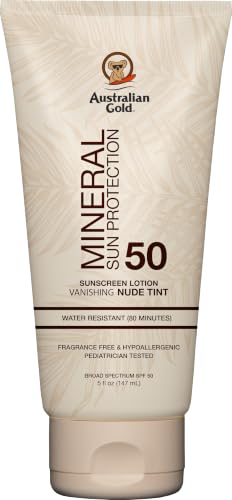
The Australian Gold Botanical tinted mineral sunscreen fills a real gap in the market: a clean, plant-based formula with a genuine tint, at a price under $25. It uses antioxidant-rich botanicals including kakadu plum and sea buckthorn alongside zinc oxide and titanium dioxide. The tint is medium rather than sheer, providing more coverage than some entries on this list, though it works best on fair to medium skin tones.
I particularly like this one for women who are building their antioxidant protection through both skincare and SPF, since the botanical blend adds a meaningful layer of free-radical defense. The formula is reef-safe and cruelty-free.
SPF: 50 | Finish: Dewy | Coverage: Light-medium | Formula: Mineral (tinted)

How to Apply Face Sunscreen Over 60 Without a White Cast
Even the best formula will look chalky if it is applied incorrectly on mature skin. Here is exactly how I apply sunscreen for the smoothest, most invisible finish:
- Start with a fully moisturized face. Apply your moisturizer first and let it sink in for 60 seconds. Dry skin grabs white cast and holds onto it.
- Use the right amount. For your face and neck, you need about a quarter teaspoon (1.25 ml) of sunscreen. Most people apply less than half the amount they need, which reduces both protection and the evenness of the finish.
- Apply with gentle pressing motions. Press the product into skin rather than rubbing. Rubbing drags the formula, creates streaks, and increases the chance of pilling under makeup.
- Wait 60 seconds before applying makeup. This allows the formula to set and prevents patchiness under foundation.
- Blend your hairline and jaw. These are the spots where white cast is most visible and most often missed.
- Reapply every two hours outdoors using a powder SPF like the Colorescience brush-on, a setting spray SPF like Supergoop! Poof or Coola Refreshing Water Mist, or simply blot and reapply your regular face SPF before heading back outside.
On sunny days, sunscreen is just one layer of protection. Pairing it with a best sun shirt for hot weather gives your chest, neck, and arms coverage without the hassle of constant reapplication on those areas.

How to Layer Sunscreen Into Your 60s Skincare Routine
A lot of women ask me where sunscreen fits when they are also using serums, eye creams, and moisturizers. Here is the order that works best for mature skin:
Morning routine: Cleanser > Vitamin C serum (optional) > Eye cream > Moisturizer > Sunscreen
Sunscreen is always the last step in the morning. Applying it on top of your moisturizer creates a protective film on the outermost layer of skin where it needs to do its work.
If you have noticed redness or puffiness around your eyes from product sensitivity, my guide on how to soothe irritated skin around eyes has practical steps for calming and protecting that zone before you layer your SPF.
Does SPF in Foundation Count?
This question comes up constantly, so I want to address it directly. SPF in foundation alone is not enough protection for women over 60. Most people do not apply foundation in the amount required to achieve the SPF listed on the label, and coverage becomes uneven as foundation fades throughout the day.
Think of SPF in your foundation, BB cream, or CC cream as a bonus layer, not your primary protection. Always apply a dedicated face sunscreen first, then add your tinted products on top. The exception: if you are using a tinted SPF 50 that also provides coverage — such as the La Roche-Posay Anthelios Tinted or the EltaMD UV Elements Tinted listed above — that product counts, because it is formulated at the concentration needed to deliver the labeled SPF.
For a full list of my favorite multi-tasking beauty products for women over 50, including tinted SPFs and treatment moisturizers, see 31 Must-Have Beauty Products Every Woman Should Have.
Frequently Asked Questions
What is the best face sunscreen for women over 60 with dry skin?
Look for a hydrating mineral sunscreen for dry mature skin with ingredients like hyaluronic acid, ceramides, or glycerin built into the formula. These ingredients prevent the sunscreen from sitting on top of skin or emphasizing dry patches. My top picks for dry skin are the CeraVe Hydrating Mineral Tinted SPF 50 and the EltaMD UV Elements Tinted — both deliver real moisture alongside strong broad-spectrum protection and neither settles into fine lines or crepey texture.
Why does my sunscreen look white and ashy on my skin?
The white cast almost always comes from untinted zinc oxide, which reflects light and reads as gray or ashy on anything deeper than a very fair complexion. Switching to a tinted mineral sunscreen to prevent white cast on mature skin solves the problem in most cases. Look for iron oxides in the ingredient list — those are what neutralize the whiteness. Also make sure you are applying to fully moisturized skin, since dryness amplifies the chalky appearance considerably.
Is mineral or chemical sunscreen better for women over 60?
Both types are effective at blocking UV rays, but mineral sunscreen is generally better for aging and sensitive skin because it works by sitting on top of skin rather than absorbing into it. This makes mineral formulas less likely to cause irritation, particularly for women with rosacea, eczema, or fragrance sensitivities that tend to develop or worsen after menopause. That said, if your primary concern is white cast and you have tolerant skin, a chemical or hybrid formula may give you a more elegant finish. The best sunscreen is ultimately the one you will actually wear every day.
How often should women over 60 reapply sunscreen?
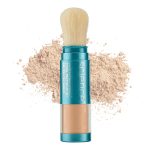
Reapply every two hours when you are outdoors, or immediately after swimming or heavy sweating. Indoors, reapplication is less critical, but if you sit near windows, UVA rays can still reach your skin throughout the day. A powder SPF for reapplication over makeup like the Colorescience Brush-On Shield, or a setting spray SPF like Supergoop! Poof, makes midday touch-ups easy without disturbing your foundation. Keep one in your handbag and you will never have an excuse to skip it.
Can I use sunscreen on my eyelids?
Most standard face sunscreens are not formulated for eyelid skin, which is extremely thin, sensitive, and prone to absorbing products into the eyes. You need formulas that have been specifically tested for the eye area. You can find eyelid-safe options in my roundup of the 9 Best Sunscreen for Eyelids, which covers mineral-only formulas that won’t sting, migrate, or irritate the delicate tissue around your eyes.
Does sunscreen help with age spots and hyperpigmentation?
Yes, and it is actually one of the most powerful tools you have for managing discoloration. Daily sunscreen prevents new dark spots from forming and keeps existing spots from darkening — because UV exposure directly triggers the melanin overproduction that causes those brown patches. Sunscreen alone won’t reverse existing spots, but without it, any brightening serum or treatment you are using is fighting an uphill battle. Think of SPF as the non-negotiable foundation that makes everything else in your skincare routine work better.
What SPF should women over 60 use on their face?

Dermatologists recommend a minimum SPF 30 for daily face protection, with SPF 50 preferred for those with significant sun damage history or who spend meaningful time outdoors. SPF 30 blocks about 97% of UVB rays while SPF 50 blocks about 98% — the gap is small, but meaningful when your skin has already accumulated decades of UV exposure. Going above SPF 50 offers diminishing returns, so there is no need to seek out SPF 100 formulas.
What is the best sunscreen for crepey skin on the face?

The best sunscreen for crepey skin over 60 is one that hydrates as it protects, so it plumps the skin surface rather than settling into texture and highlighting it. Avoid any formula with a dry or matte finish — these tend to accentuate crepe rather than minimize it. Go for dewy or satin finishes with hyaluronic acid or ceramides in the formula. The CeraVe Hydrating Tinted, EltaMD UV Elements Tinted, and Isdin Eryfotona Actinica are all excellent choices for this specific concern.
Final Thoughts
Finding the best face sunscreen for women over 60 that doesn’t look chalky or ashy really does come down to formula type, ingredients, and application technique. The chalky look that made so many of us abandon sunscreen for years is genuinely solvable now.
My personal daily driver alternates between the EltaMD UV Elements Tinted on mornings when I want polished coverage and the CeraVe Hydrating Tinted for days when I need extra moisture. I keep the Colorescience brush-on in my bag for reapplication any time I am outside for more than an hour.
Whatever formula you choose from this list, the most important thing is that you use it every single day. Your skin has already done the hard work of getting you here. Sun protection is how you help it keep going strong.
About the author

Claudia Faucher is a fitness and lifestyle blogger who shares practical tips for women over 50 on staying active, stylish, and confident. As the creator of FitFab50.com and Beyond59.com, she covers topics like workout gear, beauty trends, and wellness routines. Claudia is passionate about helping others live their best life at any age.
Last update on 2026-10-24 / Affiliate links / Images from Amazon Product Advertising API