
If you are looking for the best sunscreen for seniors, you are in the right place.

I have been writing about skincare for women and men over 50 for years, and sunscreen is the one topic I never stop coming back to. Not because it is complicated, but because the formulas that work at 35 genuinely stop working at 65. Thinning skin, a compromised barrier, post-menopause sensitivity, dry patches, medications that increase photosensitivity. These are not abstract concerns. They are what I hear about from readers every week.
The formulas reviewed here were selected specifically for aging skin. Not for general adult skin. Not for acne-prone 30-year-olds. For the specific biology of skin after 60.
How I selected these picks: I evaluated formulas based on ingredient compatibility with aging skin, dermatologist recommendations for seniors specifically, and real-world feedback from FitFab50 readers over 60. I looked for fragrance-free formulas, senior-relevant texture issues, and features that address the skin conditions most common in this age group.
Why Sunscreen Is More Important After 60
Skin cancer is the most common cancer in the United States. The risk increases significantly with age. Adults over 65 account for more than half of all melanoma diagnoses each year.
But cancer is not the only reason. Photoaging is the term dermatologists use for the visible damage caused by decades of UV exposure. Deep wrinkles, leathery texture, and the dark patches many of us call age spots (technically called solar lentigines) are all driven largely by cumulative UV exposure. If you are already dealing with visible sun damage, my guide to best products for sun damaged skin on face covers the treatment side.
Here is what most people miss: new UV damage continues every single day, even on overcast days and even through window glass indoors. Many people skip sunscreen at home, but UVA rays penetrate glass and accumulate silently over time. Wearing broad spectrum sunscreen every morning is the single most effective thing you can do for your skin going forward.
UVA rays penetrate deep into the dermis and drive photoaging. UVB rays cause sunburn. You need protection from both. Always look for “broad spectrum” on the label.
What Changes About Your Skin After 60 (and Why It Changes What Sunscreen You Need)
This is not a section you will find in a general sunscreen guide. These are aging-specific changes that directly affect which formulas work and which ones fail.

Ceramide depletion changes your barrier. Ceramides are the lipids that hold skin cells together and lock moisture in. After menopause, ceramide production drops sharply. Skin that once tolerated chemical filters and alcohol-based formulas may now react to them. This is why a sunscreen that worked fine at 45 may sting, peel, or cause flushing at 65. It is not just sensitivity. It is a structural change.
Thinner skin bruises and tears differently. Atrophic skin, especially in adults on blood thinners or long-term corticosteroids, cannot handle the vigorous rubbing that many lotion formulas require for proper application. Sticks, pats, and light buffers are often more appropriate than squeeze-and-rub formulas.
Post-menopause inflammation is real. Many women over 60 experience an uptick in skin reactivity after menopause due to falling estrogen levels. Ingredients that were previously tolerable, including oxybenzone, fragrances, and some preservatives, can suddenly trigger contact dermatitis. Fragrance-free and mineral-only formulas become more important in this stage, not less.
Medications increase photosensitivity. Some of the most common medications taken by adults over 60, including certain blood pressure drugs, diuretics, statins, antibiotics, and NSAIDs, increase how quickly UV rays damage skin. For seniors on any of these, a higher SPF is not optional. It is essential.
Dry and dehydrated skin makes many sunscreens pill. Loss of natural oil production means skin has less of the natural “grip” that helps sunscreen spread and bond. Sunscreens with humectants and emollients built in are not a luxury for seniors. They are what makes wearing sunscreen daily actually achievable.
Senior Sunscreen Buying Guide: What to Look For

Before the product reviews, here is a checklist built for the specific needs of skin over 60.
- Broad spectrum (blocks UVA and UVB). Non-negotiable.
- SPF 30 minimum for daily use. SPF 50+ if you take photosensitizing medications or spend time outdoors regularly.
- Mineral filters (zinc oxide or titanium dioxide) if you have reactive skin, rosacea, or a history of contact dermatitis. Mineral filters work on the skin surface and are not absorbed.
- Fragrance-free formula for any product used on the face. Fragrance is the leading cause of contact dermatitis in sunscreen, and the risk increases as skin barrier function declines with age.
- Moisturizing base with ceramides, hyaluronic acid, or glycerin. These reduce the drying effect that many sunscreens have on already-dry aging skin.
- No oxybenzone if you have sensitive or reactive skin. This chemical filter is absorbed through the skin and is a common sensitizer for older adults.
- Easy application format. Sticks eliminate rubbing for arthritic hands. Fluids and lotions are easier to spread evenly on thin skin without tugging.
The Best Sunscreens for Seniors: My Top Picks for 2026
Quick Comparison
| Product | SPF | Type | Best For | Senior-Specific Feature |
|---|---|---|---|---|
| ⭐ EltaMD UV Clear SPF 46 | 46 | Mineral/Hybrid | Post-menopause reactive skin | Niacinamide calms barrier inflammation |
| La Roche-Posay Anthelios SPF 100 | 100 | Chemical | Skin cancer survivors, high-exposure seniors | Maximum UVB block for high-risk adults |
| CeraVe Hydrating Mineral SPF 50 | 50 | Mineral | Ceramide-depleted aging skin | Replenishes ceramides lost with age |
| Blue Lizard Sensitive SPF 50+ | 50+ | Mineral | Medication-sensitized skin | No chemical filters, UV alert cap |
| Neutrogena Age Shield SPF 110 | 110 | Chemical | Preventing new age spots | Highest daily SPF for photoaging prevention |
| Supergoop! Unseen SPF 40 | 40 | Chemical | Makeup wearers with mature skin texture | Solves pilling on loose aging skin |
| Coppertone Pure & Simple SPF 50 | 50 | Mineral | Budget-conscious seniors | Clean mineral formula at drugstore price |
| Sun Bum Original SPF 50 | 50 | Chemical | Active, outdoorsy seniors | 80-min water resistance for golf, swimming |
1. EltaMD UV Clear Broad-Spectrum SPF 46
⭐ Editor’s Choice: Best Sunscreen for Seniors with Post-Menopause Skin Reactivity
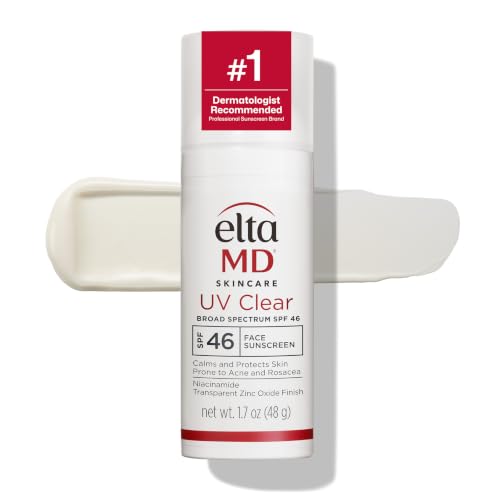
This is the formula I recommend first to women in their 60s and 70s who have noticed their skin has become more reactive in recent years. That increased reactivity is not imagined. It is a documented effect of declining estrogen, which reduces the skin’s inflammatory threshold and weakens the barrier.
What makes EltaMD UV Clear the right answer for this specific problem is the 5% niacinamide in the formula. Niacinamide is clinically shown to calm skin inflammation, strengthen the epidermal barrier, and reduce redness. For post-menopause skin that flushes easily or reacts to products it tolerated for years, that barrier-supportive action is exactly what is needed from a daily sunscreen.
The zinc oxide provides mineral protection without the full white cast of pure mineral formulas. The finish is sheer enough for daily face use and layers well under foundation without pilling, which matters more on mature skin that has lost some elasticity and surface smoothness.
This formula does not feel like most sunscreens. There is no greasiness, no fragrance, no stinging. It feels more like a light serum with sun protection than a traditional sunscreen. That is important for compliance. If a sunscreen feels good, seniors are far more likely to wear it every single day.
Bottom Line: The single best daily face sunscreen for women over 60 dealing with post-menopause reactivity, flushing, or a compromised skin barrier. The niacinamide benefit sets it apart from every other option on this list.
Key specs: SPF 46 | Mineral/chemical hybrid | Fragrance-free | 5% niacinamide | Non-comedogenic
2. La Roche-Posay Anthelios Melt-in Milk SPF 100
Best Sunscreen for Seniors with a History of Skin Cancer or High Sun Exposure

Most dermatologists agree that SPF 30 to 50 is adequate for the average adult. For seniors who have already had a basal cell carcinoma removed, a squamous cell carcinoma treated, or a melanoma scare, the calculus changes. For anyone who golfs, gardens, swims, or spends multiple hours outdoors several times a week, it changes again.
SPF 100 blocks approximately 99% of UVB rays, compared to 97% for SPF 30. That two-percentage-point gap sounds small but represents a meaningful difference in DNA damage accumulation when you are applying sunscreen 365 days a year on skin that already carries decades of UV-induced mutations.
The reason I recommend La Roche-Posay specifically at this SPF level is the texture. Most SPF 100 formulas are thick and difficult to apply. The Anthelios Melt-in Milk lives up to its name. It absorbs rapidly with minimal residue and no white cast, which makes it practical for daily use rather than just beach days.
The MEXORYL SX technology provides stable UVA protection that does not degrade as quickly in sunlight as avobenzone-based formulas. For seniors who are outside for hours at a time, that stability matters.
Bottom Line: The best choice for seniors who are high-risk by history or lifestyle. Not for everyone, but for the gardener, the golfer, or the person who has already sat in a Mohs surgery chair once, SPF 100 is a reasonable daily investment.
Key specs: SPF 100 | Chemical | 80-min water resistance | MEXORYL SX | Face and body
3. CeraVe Hydrating Mineral Sunscreen SPF 50
Best Sunscreen for Seniors Experiencing Ceramide Depletion

Here is something that rarely gets explained in sunscreen guides: aging skin does not just lose moisture. It loses ceramides, the structural lipids that hold the skin barrier together and determine how well skin retains any moisture you put in. By the time most women reach their mid-60s, ceramide levels in the skin have declined significantly from where they were at 40.
CeraVe was formulated with this biology in mind. The hydrating mineral sunscreen delivers three essential ceramides (1, 3, and 6-II) along with hyaluronic acid in an SPF 50 mineral base. The sunscreen protects. The ceramides actively support the barrier that aging skin is losing. These are not just moisturizing extras. They are clinically meaningful for aging skin.
The formula is 100% mineral, using zinc oxide and titanium dioxide. For seniors on multiple medications, those with a history of reactions to chemical filters, or anyone with rosacea or eczema, the all-mineral approach eliminates a significant source of potential irritation.
There is a mild white cast on deeper skin tones that buffs out with gentle circular motion. On fair to medium tones, it blends to clear. The texture is a rich lotion that does not feel heavy, and it leaves skin genuinely comfortable rather than just “not dry.”
Bottom Line: The best choice for seniors whose primary complaint is that sunscreen dries out their skin or leaves it feeling tight. The ceramide delivery is not a gimmick. It is the right ingredient for the right biological problem.
4. Blue Lizard Sensitive Mineral Sunscreen SPF 50+
Best Sunscreen for Seniors on Photosensitizing Medications
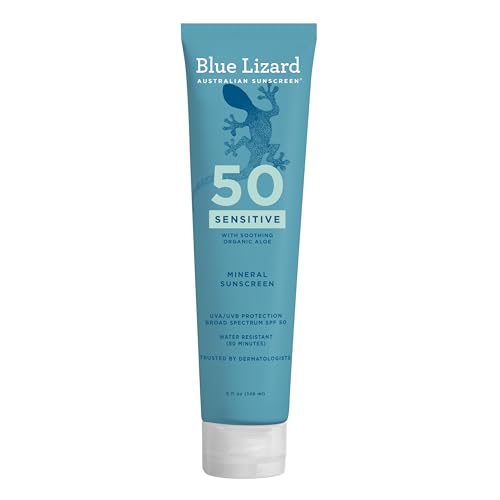
If you take a diuretic, a statin, a certain blood pressure medication, or a common antibiotic, your skin is more vulnerable to UV damage than the label on your sunscreen assumes. Photosensitizing medications can dramatically lower the UV dose required to cause a reaction, making even brief outdoor exposure in routine daily life a real risk.
For this group, a 100% mineral formula with no chemical filters is the safest approach. Blue Lizard Sensitive uses zinc oxide and titanium dioxide exclusively. Nothing in this formula is absorbed into the bloodstream in meaningful quantities. Nothing interacts with medications. Nothing creates the sensitizing reactions that chemical filters can trigger in reactive skin.
The smart UV cap, which changes color when exposed to harmful UV rays, is genuinely useful for seniors who go outside briefly multiple times a day and lose track of whether they have reapplied. It is not a substitute for a timer, but it serves as a quick visual check.
The formula is reef-safe, paraben-free, and pediatrician-tested. The texture is thicker than some formulas and takes a moment to blend, but the result is comfortable and long-wearing.
Bottom Line: The top choice for seniors managing multiple medications. The all-mineral formula eliminates the most common sensitization risks. The UV-alert cap is more useful in practice than it sounds on paper.
5. Neutrogena Age Shield Face Oil-Free Sunscreen SPF 110
Best Sunscreen for Seniors Focused on Preventing New Age Spots
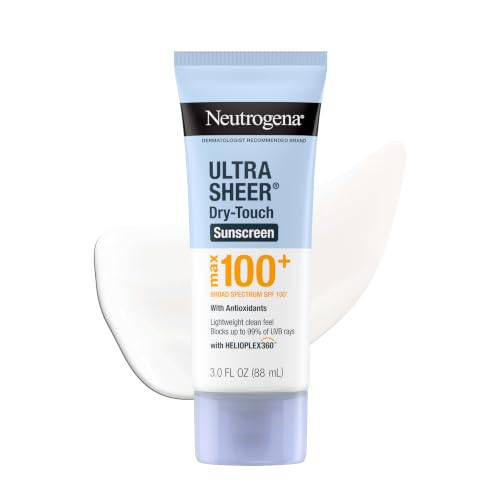
I want to be direct with you about something here, because I think a lot of women our age have been told half the story on age spots. Sunscreen does not fade the spots you already have. That is the job of brightening serums with niacinamide, vitamin C, or kojic acid. What sunscreen does is stop new ones from forming and stop existing ones from getting darker.
UV exposure triggers excess melanin production in skin that already has melanocytes functioning at higher baseline levels due to decades of prior UV stimulation. Every unprotected day adds to the deposit. Every day with high-SPF protection slows or stops it.
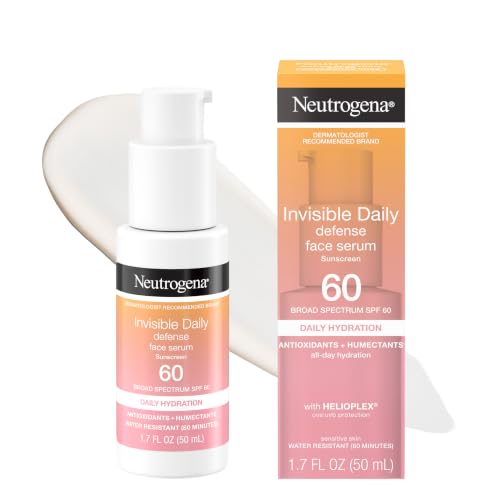
If preventing new dark spots is your primary skin goal, SPF 110 is the strongest daily tool available. Neutrogena’s Helioplex technology provides stable broad-spectrum protection throughout the day, meaning it does not degrade as quickly in sunlight as some chemical-filter formulas.
The oil-free formula is designed for the face and applies with a matte finish. It is not the most luxurious texture on the list. For very dry skin, a ceramide moisturizer underneath will keep the finish comfortable. If you already deal with existing spots, my guide to best lotion for age spots on hands for women over 50 covers the treatment side.
Bottom Line: The best daily choice for seniors whose primary concern is halting the progression of age spots and photoaging. Daily SPF 110 is one of the most powerful prevention tools available without a prescription.
Key specs: SPF 110 | Chemical | Helioplex technology | Oil-free | Broad spectrum
6. Supergoop! Unseen Sunscreen SPF 40
Best Sunscreen for Seniors Who Wear Foundation Daily
There is a specific problem that gets worse as skin ages, and almost no general sunscreen guide addresses it: pilling. When sunscreen is applied on top of a skincare routine on mature skin, which has looser texture, more surface irregularity, and less of the natural oils that help products bond, the formula can ball up and pill under foundation. It is one of the main reasons women over 60 give up on daily SPF. The pilling makes foundation look terrible and skin look older than it is.
Supergoop! Unseen Sunscreen was designed to solve exactly this problem. The silicone-based gel formula fills surface texture rather than sitting on top of it, creating the smooth, gripping base that allows foundation to lay flat. It behaves like a blurring primer. On mature skin specifically, the improvement in foundation application is noticeable.
The formula is completely colorless, oil-free, and fragrance-free. There is no white cast and no discernible scent. It is also reef-safe, which matters for any reader planning beach or cruise travel.
The price is the main caveat. This is one of the more expensive formulas on the list. But for daily facial use, a tube lasts most people several months. And if it is the formula that finally keeps you consistent with daily SPF, the price is irrelevant compared to the benefit.
Bottom Line: The best choice for women over 60 who have given up on sunscreen under makeup because of pilling or slipping. This formula changes the experience entirely.
Key specs: SPF 40 | Chemical | Completely clear | Fragrance-free | Primer-like finish | Reef-safe
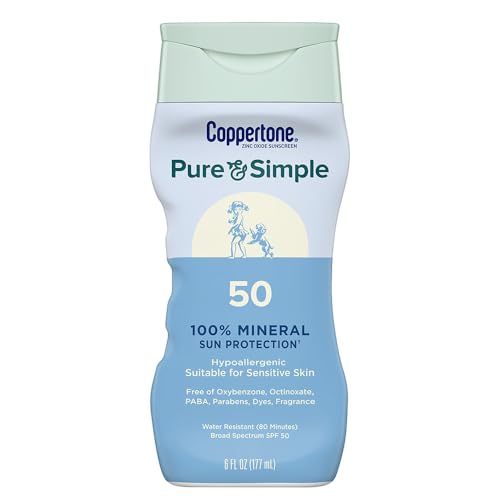
7. Coppertone Pure & Simple Mineral Sunscreen SPF 50
Best Budget Mineral Sunscreen for Seniors
Not everyone needs or wants a $35 daily sunscreen. Compliance matters more than formula elegance. A good sunscreen worn every single day outperforms a great sunscreen worn occasionally.
Coppertone Pure & Simple delivers solid broad-spectrum mineral protection with zinc oxide as its sole active ingredient. The formula is free of parabens, phthalates, synthetic fragrances, and most of the preservatives that commonly irritate older skin. It is not as elegant as EltaMD, and there is a light white cast on deeper skin tones. But on fair to medium skin it blends out with gentle buffing.
For seniors who want a clean mineral formula without spending a lot, this is the first one to try. It is available at most drugstores and big-box retailers, which matters for anyone who does not want to order online.
Bottom Line: The best option for seniors who want to try mineral sunscreen for the first time without committing to a premium price. If it works for your skin, you will not find a better value.
Key specs: SPF 50 | 100% zinc oxide | Budget-friendly | Paraben and fragrance-free | Widely available
8. Sun Bum Original SPF 50 Sunscreen Lotion
Best Sunscreen for Active, Outdoorsy Seniors
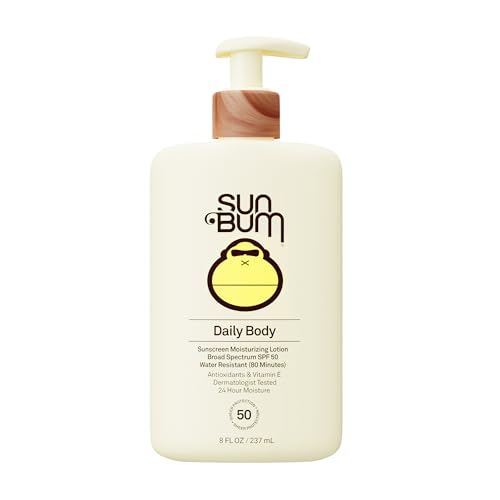
For swimmers, walkers, golfers, pickleball players, and anyone else who spends hours outside and sweats through conventional sunscreens, water resistance is not optional. Sun Bum Original provides 80 minutes of water and sweat resistance, meaning it holds up through a full round of golf, a beach swim, or a two-hour pickleball session before requiring reapplication.
The formula is vegan, Hawaii reef-safe (no oxybenzone or octinoxate), and contains vitamin E as a free-radical scavenging antioxidant. It applies with a lightly moisturizing finish and blends easily on both face and body.
The mild tropical scent is the one caveat. It fades within a few minutes and is not strong enough to cause reactions for most people, but if fragrance is a genuine concern for your skin, this formula is better suited to body use than face use. For facial use in active conditions, La Roche-Posay Anthelios is a closer match. If you run outdoors, my guide on tips for running in high temperatures covers how UV exposure compounds heat stress, and how runner’s face develops in runners who skip daily SPF.
Bottom Line: The best body sunscreen for active seniors. Holds up through outdoor activities that would wash off or sweat off most standard formulas.
Key specs: SPF 50 | Chemical | 80-min water resistance | Reef-safe | Vitamin E
By Skin Condition: Where to Start

Post-menopause reactive skin: EltaMD UV Clear. The niacinamide addresses the barrier inflammation that drives reactivity in this stage.
On photosensitizing medications: Blue Lizard Sensitive. All-mineral, nothing absorbed, nothing interacting.
Ceramide-depleted dry skin: CeraVe Hydrating Mineral. Replenishes what aging skin specifically loses.
Wearing foundation daily: Supergoop! Unseen. Solves the pilling problem that drives women over 60 to skip SPF entirely.
High-risk by history or lifestyle: La Roche-Posay Anthelios SPF 100. The step up in protection is meaningful for skin cancer survivors and high-exposure seniors.
Preventing age spots: Neutrogena Age Shield SPF 110. Paired with a best moisturizer to even skin tone or a tinted SPF moisturizer in your routine.
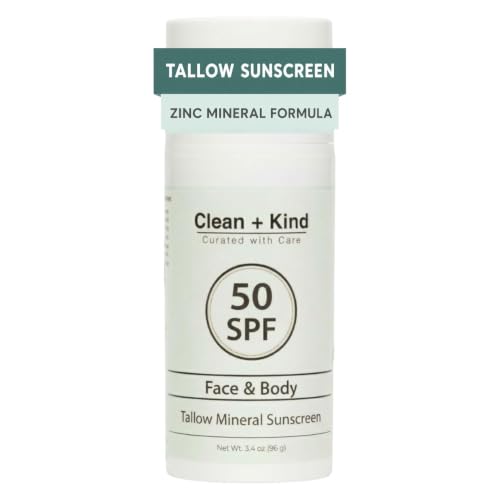
Arthritic hands: Sunscreen sticks apply with a glide-on motion that requires no squeezing and minimal rubbing. Pair any formula above with a sun shirt for hot weather for full upper-body UV coverage outdoors.
Active and outdoors: Sun Bum Original. Also relevant: best body lotion for aging, crepey skin for post-sun body care on active days.
Budget-focused: Coppertone Pure & Simple.
How to Apply Sunscreen When You Are Over 60
The application basics, including how much to use, when to apply, and how often to reapply, are covered in detail in my dedicated guide on whether daily sunscreen application at home is necessary. Three senior-specific points deserve attention here.
Thin skin needs patting, not rubbing. On atrophic or fragile skin, vigorous rubbing can cause bruising or tearing. Use a tapping and light buffing motion rather than rubbing. Sunscreen sticks are particularly useful here.
Missed spots are a senior-specific risk. The ears, the back of the neck, the tops of the hands, and the scalp on thinning hair are among the most common sites for skin cancer in older adults and among the most commonly missed areas. Add these to your daily routine as a non-negotiable.
Medications change your reapplication math. If you take a photosensitizing medication, the standard “reapply every two hours” guideline may not be adequate for extended outdoor exposure. Ask your dermatologist or pharmacist whether your specific medication changes that schedule.
The Skin Cancer Conversation Every Senior Needs to Have
I want to step outside the product recommendations for a moment, because I think this matters more than which formula you choose.
Honestly? I was in my 50s before I took this seriously. I wore sunscreen on beach days and figured that covered it. It did not. The damage that accumulates from unprotected daily exposure, driving, walking to the car, sitting by a window, adds up every year. And by 60, that accumulated damage significantly raises the risk of melanoma, basal cell carcinoma, and squamous cell carcinoma.
Adults over 60 account for more than half of all melanoma diagnoses. The good news that I hold onto: regular sunscreen use reduces melanoma risk by approximately 50% and squamous cell carcinoma risk by about 40%. You can still influence your outcome from here.
Precancerous lesions called actinic keratoses are also far more common after 60 and often go unnoticed until a dermatologist finds them. My guide to best products for actinic keratosis treatment at home covers what to look for. For those who have already been through photoaging damage and want professional intervention, IPL photofacials for adults over 50 are worth discussing with a dermatologist.
Please book an annual full-body skin check if you have not done one recently. More than the sunscreen, that appointment is the most important thing I can recommend.
Frequently Asked Questions
What SPF should seniors use daily?
SPF 30 to 50 for most seniors. SPF 30 blocks about 97% of UVB rays and provides solid protection for routine daily activities. If you take photosensitizing medications, have had skin cancer, or spend extended time outdoors, step up to SPF 50 or higher. For high-risk seniors, SPF 100 is a reasonable daily choice.
Is mineral or chemical sunscreen better for aging skin?
Mineral sunscreen is generally better for aging skin because it sits on the skin surface rather than being absorbed, making it less likely to cause irritation or interact with medications. The key minerals are zinc oxide and titanium dioxide. For seniors with reactive skin, rosacea, or a history of contact dermatitis, a mineral or mineral-hybrid formula is the safer starting point.
Does sunscreen help with age spots?
Sunscreen prevents new age spots from forming and stops existing spots from darkening further. It does not fade spots already present. For fading existing hyperpigmentation, look for brightening topicals with vitamin C, niacinamide, or kojic acid. My guide to best lotion for age spots on hands for women over 50 covers the treatment side. But sunscreen is the foundation of any anti-spot routine.
Can seniors use regular sunscreen, or do they need a special formula?
There is no category labeled “senior sunscreen.” But aging skin does have specific needs that most general-market formulas do not address: fragrance-free, ceramide-containing, mineral filters, and textures that apply without vigorous rubbing. Every formula reviewed in this guide was selected specifically for those aging-skin requirements.
What sunscreen works best under makeup for women over 60?
Supergoop! Unseen SPF 40 for the pilling problem. EltaMD UV Clear for a more affordable option that still layers cleanly. A tinted moisturizer with SPF for mature skin is another option that replaces the foundation step entirely.
How often should seniors reapply?
Every two hours during outdoor activities, and immediately after swimming or heavy sweating. For a mostly-indoor day with brief outdoor exposure, once in the morning with a midday touch-up is generally sufficient. If you take photosensitizing medications, ask your doctor whether your medication changes this guideline.
Is sunscreen safe on skin that is thin or bruises easily?
Yes, but application technique matters. Use a patting or light buffing motion rather than rubbing. Sunscreen sticks are often more appropriate than squeeze-bottle formulas for very thin skin. Avoid any formula with alcohol in the first few ingredients, as alcohol can accelerate skin thinning and dehydration.
What is the difference between UVA and UVB rays?
UVB rays cause sunburn and play a primary role in skin cancer development. UVA rays penetrate deeper into the dermis, driving the photoaging that produces wrinkles, leathery texture, and age spots. Both cause DNA damage that can lead to cancer. Broad spectrum sunscreen blocks both. This distinction matters when evaluating formulas because some sunscreens block UVB effectively but provide less robust UVA coverage. Look for the words “broad spectrum” as a minimum, and check for UVA-specific filter technology like MEXORYL SX or avobenzone for full coverage.
Final Thoughts
After everything I have researched and written about skincare for women and men over 50, this is still the truth I come back to most often: your skin at 60, 70, and 80 is being shaped right now by what you do today.
The best sunscreen is the one you will wear every single day without finding reasons to skip it. That means finding a formula that feels good, fits your skin type, and does not fight with your makeup or your medication.
For most women over 60, I start with EltaMD UV Clear. The niacinamide support for aging barrier function is genuinely different from what other formulas offer. If budget matters, CeraVe Hydrating Mineral delivers the ceramide replenishment that aging skin needs at a fraction of the price.
Please wear one of these every morning. And please book that annual skin check.
About the author

Claudia Faucher is a fitness and lifestyle blogger who shares practical tips for women over 50 on staying active, stylish, and confident. As the creator of FitFab50.com and Beyond59.com, she covers topics like workout gear, beauty trends, and wellness routines. Claudia is passionate about helping others live their best life at any age.
Last update on 2026-10-19 / Affiliate links / Images from Amazon Product Advertising API