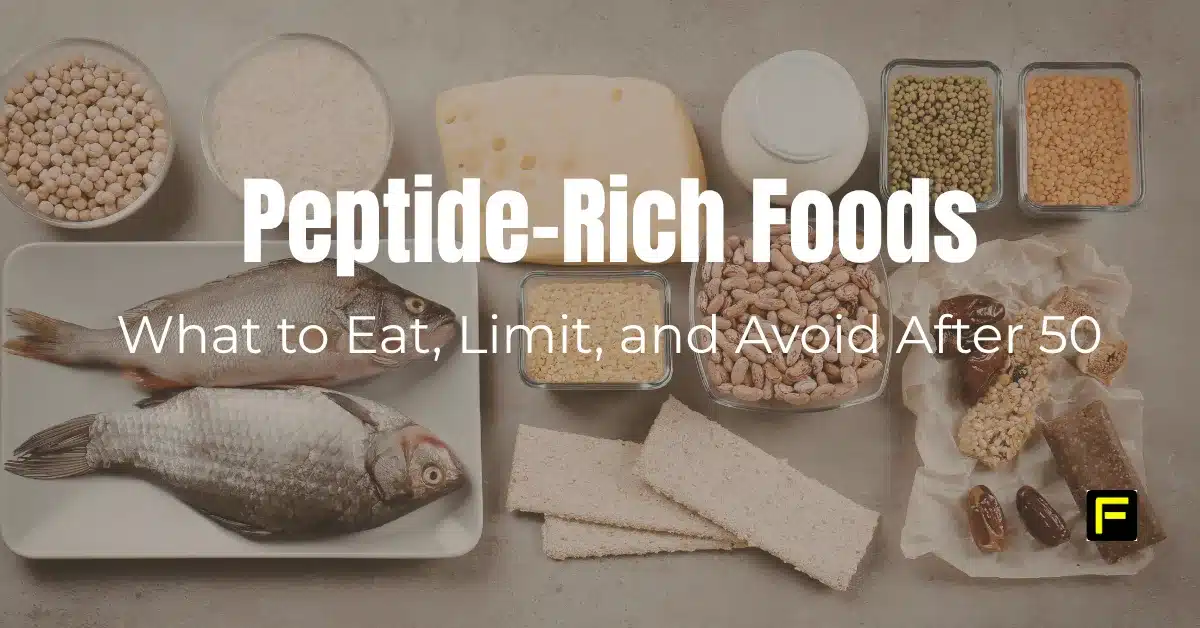
If you are over 50 and serious about holding on to your muscle, protecting your joints, and keeping your gut healthy, peptides deserve your attention. Most guys in our age group have never heard of them — but they are working hard inside your body every single day.
Peptide-rich foods are one of the most underrated tools in the over-50 fitness toolkit. The good news is that most of them are already sitting on grocery store shelves, and eating more of them is a simple upgrade you can make starting this week.
What Are Peptides and Why Do They Matter After 50?
Peptides are short chains of amino acids — essentially small fragments of protein. When you eat protein and digest it, your body breaks it down into both free amino acids and these smaller peptide chains.
Those peptide chains are not just building blocks. Research shows they can act as signaling molecules in the body, influencing everything from muscle protein synthesis to inflammation to immune function. For men over 50 who are already fighting a slower metabolism, declining testosterone, and natural muscle loss, getting more of them through food is a smart move.
The key is knowing which foods actively deliver peptides or support your body’s ability to produce them, which ones are neutral fillers worth moderating, and which ones actively get in the way.
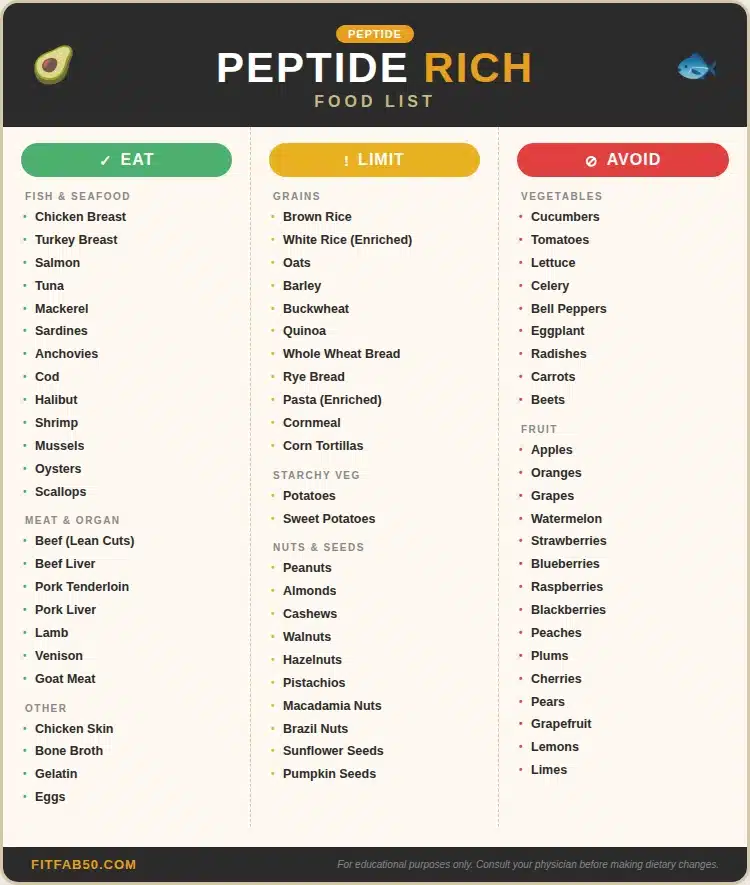
Foods to Eat: High-Peptide Protein Sources
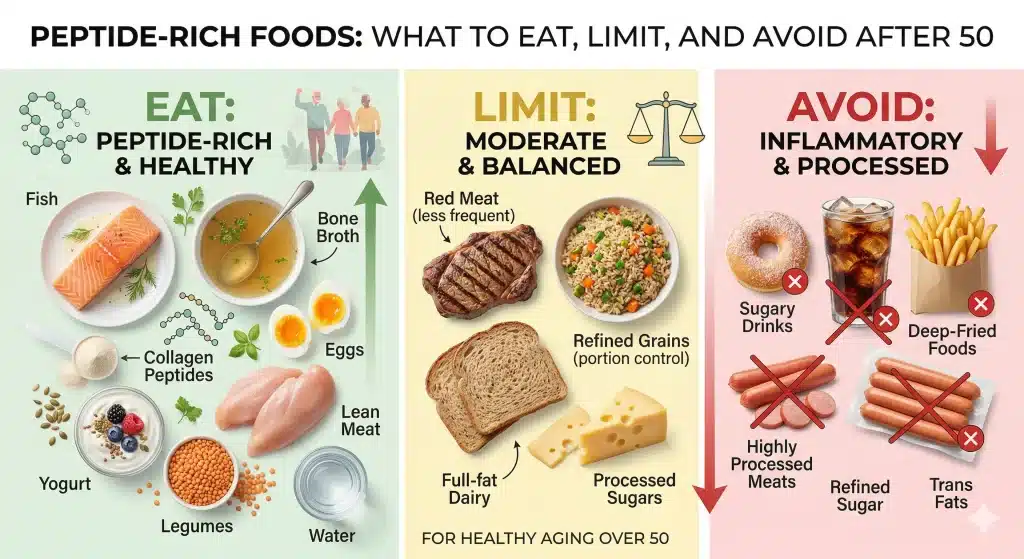
These are the foundation of a peptide-rich diet. They are dense in complete protein, rich in collagen precursors, and deliver the amino acid profiles your body needs most after 50.
Fish and Seafood
Fatty fish and shellfish sit at the top of the list for good reason. Salmon, tuna, mackerel, sardines, anchovies, cod, and halibut are all excellent sources of bioactive peptides, particularly those linked to cardiovascular and anti-inflammatory benefits.
Shellfish bring their own advantages. Shrimp, mussels, oysters, and scallops deliver peptides along with zinc and other minerals that support hormone health in aging men.
Poultry
Chicken breast and turkey breast are the workhorses of a high-protein diet for a reason. They are lean, versatile, and loaded with the amino acids your body uses to build and repair muscle tissue.
Do not overlook chicken skin and bone broth. These are particularly rich in collagen peptides, which support joint health and skin integrity — two things that start to slip in your fifties if you are not paying attention.
Red Meat and Organ Meats
Lean cuts of beef, pork tenderloin, lamb, venison, and goat meat all deliver substantial peptide profiles. Beef liver and pork liver are especially dense in nutrients and contain bioactive compounds that you simply cannot get from standard muscle meat alone.
If organ meats are new territory for you, start with beef liver. Even one or two servings per week gives you a meaningful nutritional edge.
Eggs and Gelatin
Eggs are one of the most complete protein sources on the planet. They are affordable, versatile, and deliver a peptide profile that supports muscle synthesis and recovery.
Gelatin is the sleeper pick on this list. It is made from collagen-rich connective tissue and delivers a concentrated dose of glycine and proline — two amino acids that are critical for joint health, gut lining integrity, and sleep quality.
Foods to Limit: Moderate Peptide Contributors
These foods are not off the table, but they should not be the center of your plate. They contribute some amino acids and peptides, but at a lower density than animal proteins, and they often come with a higher carbohydrate load that can work against body composition goals after 50.
Grains
Brown rice, oats, barley, buckwheat, quinoa, whole wheat bread, rye bread, enriched pasta, cornmeal, and corn tortillas all contain plant-based proteins with some peptide activity. Quinoa is notable because it is a complete protein among plant sources.
The issue is volume. You would need to eat a large amount of these foods to approach the peptide contribution you get from a single serving of salmon or eggs. Use them as supporting carbohydrates in your meals rather than your primary protein strategy.
Starchy Vegetables
Potatoes and sweet potatoes offer modest amino acid content and are excellent sources of resistant starch and potassium. They are solid whole foods, but peptide density is low.
Keep portions moderate if body composition is a priority. A medium sweet potato alongside a protein-forward main is a smart combination.
Nuts and Seeds
Almonds, walnuts, cashews, hazelnuts, pistachios, macadamia nuts, Brazil nuts, peanuts, sunflower seeds, and pumpkin seeds all contain plant proteins and some bioactive compounds. Pumpkin seeds in particular have been studied for their amino acid content.
The calorie density of nuts is something to watch. A small handful as a snack or salad topper makes sense. Eating them by the bagful while trying to manage weight does not.
Foods to Avoid: Low-Peptide, High-Sugar Options
This category will raise some eyebrows. Many of these foods are perfectly healthy in other contexts — but if your specific goal is maximizing dietary peptide intake, they deliver very little value and often come with a high sugar load that can interfere with recovery and body composition.
Most Vegetables
Cucumbers, tomatoes, lettuce, celery, bell peppers, eggplant, radishes, carrots, and beets are all nutritious foods. Nobody is telling you to stop eating vegetables.
The point is that they are negligible peptide contributors. If you are trying to build a meal around peptide density, a plate full of salad greens is not getting you there. Use vegetables as your micronutrient and fiber layer, not your protein strategy.
Most Fruits
Apples, oranges, grapes, watermelon, strawberries, blueberries, raspberries, blackberries, peaches, plums, cherries, pears, grapefruit, lemons, and limes are essentially sugar and water with vitamins. Again, not bad foods — but not peptide contributors.
Berries earn a pass as an anti-inflammatory add-on. Just do not let fruit crowd out your protein at any meal.
How to Build a Peptide-Rich Day of Eating
You do not need to overthink this. The structure is simple.
Build every meal around a high-peptide protein source from the eat list. Add a moderate carbohydrate from the limit category if your activity level calls for it. Round out the plate with vegetables for fiber and micronutrients. Keep fruit as a small addition, not a centerpiece.
A practical day might look like this: eggs and smoked salmon at breakfast, chicken breast with brown rice and roasted vegetables at lunch, and a beef or lamb-based dinner with a side of bone broth. That is a straightforward, realistic approach that most men over 50 can actually follow without counting anything.
FAQ
What are peptide-rich foods?
Peptide-rich foods are foods that either contain bioactive peptides directly or provide the amino acid building blocks your body uses to produce them. Animal proteins like fish, meat, poultry, eggs, and bone broth are the most concentrated sources.
Do peptides help with muscle loss after 50?
Research supports the role of dietary peptides — particularly collagen peptides and leucine-rich protein fractions — in supporting muscle protein synthesis. Combined with resistance training, a high-peptide diet is one of the most evidence-based strategies for combating age-related muscle loss.
Is bone broth a good source of peptides?
Yes. Bone broth is one of the most concentrated food sources of collagen peptides, particularly glycine and proline. Regular consumption has been associated with improvements in joint comfort, gut health, and skin elasticity.
Why are fruits and vegetables on the avoid list?
They are not universally bad foods — they are low-peptide foods. If your specific goal is maximizing dietary peptide intake, most fruits and non-starchy vegetables contribute very little. The guidance is about prioritization, not elimination.
How much protein do men over 50 need to support peptide intake?
Current research generally recommends at least 1.2 to 1.6 grams of protein per kilogram of body weight for active men over 50. Spreading that protein across three or four meals tends to support muscle protein synthesis better than front- or back-loading it in one sitting.
Can I get enough peptides from plant-based sources?
It is more difficult. Plant proteins tend to have lower bioavailability and incomplete amino acid profiles compared to animal proteins. If you are avoiding animal products, focus on quinoa, legumes, and soy as your better options, and consider consulting a registered dietitian about supplementation.
The Bottom Line
Getting serious about peptide-rich foods is one of the highest-leverage diet moves you can make after 50. It does not require expensive supplements or exotic ingredients. It requires building your meals around real animal proteins — fish, meat, poultry, eggs, and collagen-rich foods like bone broth and gelatin.
The framework is simple: lead with the eat list, use the limit category to fill in around it, and stop expecting vegetables and fruit to carry your protein needs. That shift alone can make a meaningful difference in how you look, feel, and recover.
Medical Disclaimer: The information on this page is for educational purposes only and is not intended as medical advice. Consult your physician or a registered dietitian before making significant changes to your diet, especially if you have existing health conditions or take medications.
About the author

Rick Huey is a fitness writer who has dedicated his life to living an active lifestyle. With more than 30 years of experience in the fitness industry, Rick is a respected contributor for FitFab50.com, where he shares his wealth of knowledge with a wide audience. His dedication to promoting the benefits of living an active lifestyle has inspired many people to pursue their own fitness journeys with enthusiasm and dedication.