Finding the best sunscreen for seniors with sensitive skin is harder than it sounds.
You apply it before a walk, a round of golf, or a day in the garden, and within minutes your face is burning, stinging, or breaking out in tiny red bumps. You rinse it off and think, “Why is protecting my skin this miserable?”
You are not being dramatic. Skin over 50 genuinely behaves differently. It is thinner, drier, and far less tolerant of the synthetic chemicals and fragrances packed into many popular sunscreen formulas.
The good news? There are sunscreens made with sensitive, mature skin in mind. You just need to know what to look for and which products have earned their reputation.
This guide breaks it all down for you.
Our Top Picks at a Glance
| Product | SPF | Best For |
|---|---|---|
| EltaMD UV Clear | SPF 46 | Rosacea, redness, hyperpigmentation |
| La Roche-Posay Anthelios Mineral | SPF 50 | Highly reactive or allergy-prone skin |
| CeraVe Hydrating Mineral | SPF 50 | Dry, dehydrated, or barrier-compromised skin |
| ISDIN Eryfotona Actinica | SPF 50+ | Sun-damaged skin, actinic keratosis history |
| Blue Lizard Sensitive | SPF 30+ | Outdoor activities, gardening, sports |
| Neutrogena Sheer Zinc | SPF 50 | Budget-friendly, oily to normal skin |
| Colorescience Sunforgettable | SPF 50 | Light coverage, easy midday reapplication |
7 Best Sunscreens for Seniors with Sensitive Skin
1. EltaMD UV Clear Broad-Spectrum SPF 46
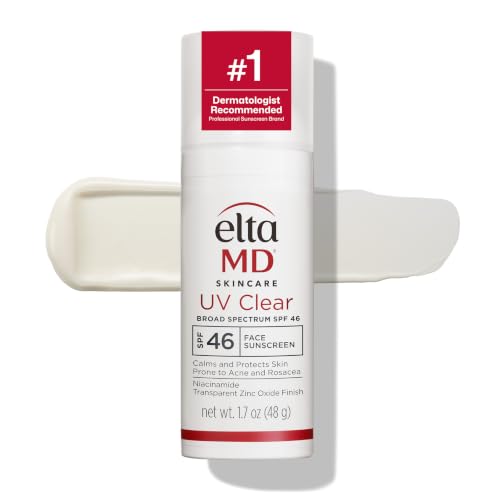
EltaMD UV Clear is consistently recommended by dermatologists for sensitive and acne-prone skin. It uses zinc oxide as its primary active ingredient alongside niacinamide, which calms redness and helps fade dark spots over time.
The texture is lightweight and silky. It layers beautifully under makeup without pilling. If you use a moisturizer under your makeup, this sunscreen works seamlessly as the next step in your routine.
It is fragrance-free, oil-free, and non-comedogenic.
Best for: Rosacea-prone skin, combination skin, anyone with post-acne marks or hyperpigmentation
Active ingredients: 9% Zinc Oxide, 7.5% Octinoxate (note: contains one chemical filter)
Why it works for seniors: The niacinamide helps address uneven skin tone while protecting the skin, and the lightweight formula does not feel heavy on thinner, mature skin.

2. La Roche-Posay Anthelios Mineral Ultra-Light Fluid SPF 50

La Roche-Posay is one of the most trusted dermatological skincare brands in Europe and has earned the same reputation in the US. Their Anthelios Mineral Ultra-Light Fluid is 100% mineral, fragrance-free, and specifically formulated for sensitive skin.
It has an ultra-fluid consistency that absorbs quickly and leaves a matte finish without feeling tight or dry. It contains antioxidants to help counteract the oxidative stress of UV exposure.
For women who find most mineral sunscreens too thick or chalky, this formula is a revelation.
Best for: Sensitive and reactive skin, those prone to contact dermatitis
Active ingredients: 25% Zinc Oxide
Why it works for seniors: Zero fragrance, zero chemical filters, and a texture that works for people who hate the feel of traditional sunscreens.
3. CeraVe Hydrating Mineral Sunscreen SPF 50 Face Lotion

CeraVe has built a loyal following for good reason. Their mineral sunscreen for the face combines zinc oxide and titanium dioxide with three essential ceramides and hyaluronic acid.
Ceramides are the lipids that form your skin barrier. As skin ages, ceramide production slows significantly, leaving the barrier weakened and reactive. A sunscreen that actively replenishes ceramides is doing double duty.

This formula is free of fragrance, parabens, and chemical UV filters. It is also developed with input from dermatologists, which is reflected in the clean, functional ingredient list.
Best for: Dry to very dry skin, dehydrated skin, compromised skin barriers
Active ingredients: 5% Zinc Oxide, 3% Titanium Dioxide
Why it works for seniors: The ceramide and hyaluronic acid content addresses the moisture deficit that comes with aging skin while providing reliable sun protection.
4. ISDIN Eryfotona Actinica Ultralight Emulsion SPF 50+
This is a specialized sunscreen worth knowing about, especially if you have already been diagnosed with actinic keratosis (precancerous sun spots) or have had skin cancer.
ISDIN Eryfotona Actinica contains DNA Repairsomes, enzymes that actively repair UV-induced DNA damage at a cellular level. It also uses 100% mineral filters and is fragrance-free.
If you are managing actinic keratosis at home and want a sunscreen that works alongside your treatment regimen rather than against it, this is one of the best options available.
Best for: High-risk skin, anyone with a history of sun damage or skin cancer, post-procedure protection
Active ingredients: 10% Zinc Oxide, Titanium Dioxide, DNA Repairsomes
Why it works for seniors: The DNA repair technology addresses decades of accumulated UV damage, not just future protection.
5. Blue Lizard Sensitive Mineral Sunscreen SPF 30+
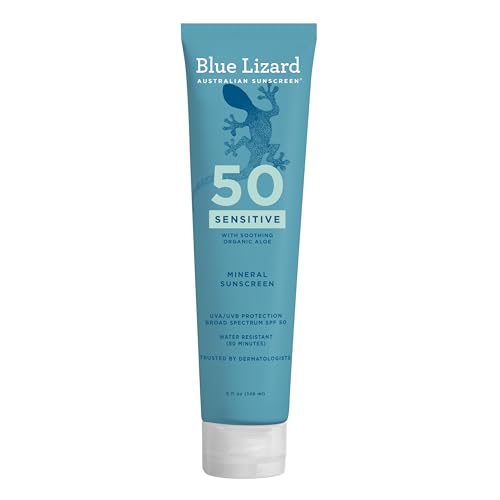
Blue Lizard was originally developed in Australia, where UV intensity is extreme and sun protection standards are strict. Their Sensitive formula uses zinc oxide and titanium dioxide with a clean supporting ingredient list.
One distinguishing feature is the smart bottle cap that turns blue when exposed to UV light, reminding you to apply sunscreen even on overcast days. It is a small but thoughtful detail.
Blue Lizard Sensitive is free of fragrances, chemical UV filters, and parabens. It is water-resistant for up to 80 minutes, making it a solid choice for outdoor activities.
Best for: Outdoor activities, gardening, sports, water activities
Active ingredients: 5% Zinc Oxide, 4% Titanium Dioxide
Why it works for seniors: The gentle formula suits reactive skin and the water resistance is a practical advantage for anyone who is physically active.
If outdoor time is leaving your skin looking dry and crepey between sunscreen applications, our guide to the best body lotion for aging crepey skin covers the best options for keeping exposed skin moisturized and supported.
6. Neutrogena Sheer Zinc Dry-Touch Sunscreen SPF 50
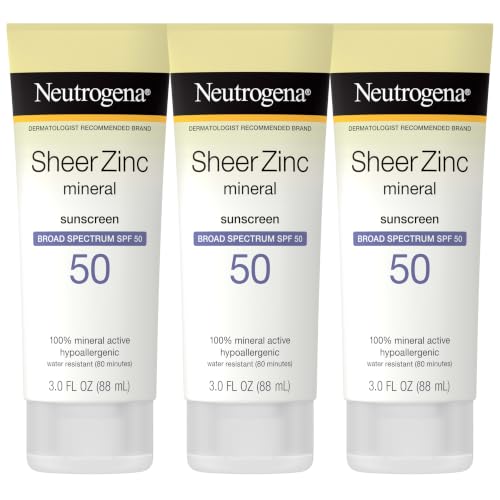
Neutrogena has made quality sunscreen accessible at a drugstore price point for decades. Their Sheer Zinc formula is 100% mineral with a dry-touch finish that works well for people who find most sunscreens too greasy or heavy.
It is fragrance-free, hypoallergenic, and non-comedogenic. The formula is also water-resistant for up to 80 minutes, giving you reliable coverage during outdoor activities.
For budget-conscious shoppers who still want a clean, mineral-only formula without breaking the bank, this is one of the best values available.
Best for: Budget-friendly option, oily to normal skin, outdoor use
Active ingredients: 21.6% Zinc Oxide
Why it works for seniors: Broad mineral coverage in a widely available, affordable formula that has a strong track record.
7. Colorescience Sunforgettable Total Protection Face Shield SPF 50
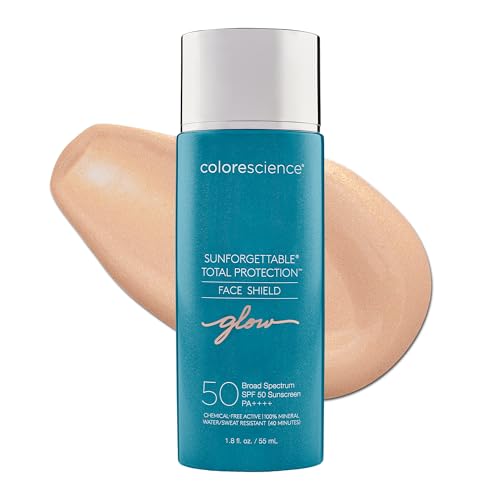
If you are looking for a mineral sunscreen that also provides light coverage and color correction, Colorescience Sunforgettable is exceptional. It comes in several shades to match different skin tones, providing tint while eliminating white cast.
It uses zinc oxide with a blend of antioxidants and is free of fragrance and chemical filters. The brush-on powder format is also unique and convenient for reapplication throughout the day without disturbing your makeup.
For women who pair their sunscreen with a skincare routine focused on even skin tone, this pairs beautifully with a moisturizer for even skin tone applied underneath.
Best for: Women who want sun protection with light coverage, easy midday reapplication
Active ingredients: 20% Zinc Oxide
Why it works for seniors: The tinted options address the uneven skin tone common in mature skin while the brush format makes reapplication realistic and convenient.
How We Chose These Products
Choosing the best sunscreen for seniors with sensitive skin requires more than reading a label. Every product on this list was evaluated against a consistent set of criteria.
Mineral-only or mineral-primary filters. Each pick uses zinc oxide, titanium dioxide, or both as the primary UV protection. Chemical filters were flagged and noted where present.
Fragrance-free formulation. No exceptions. Fragrance is the leading cause of contact dermatitis in skincare and the first ingredient sensitive skin reacts to.
Skin-barrier support. Mature skin needs more than UV protection. We prioritized formulas that include ceramides, hyaluronic acid, niacinamide, glycerin, or squalane to actively support a compromised skin barrier.
Dermatologist endorsement or clinical backing. Each product has either been developed with dermatologist input, carries a recommendation from a recognized dermatology source, or has a documented clinical history.
Real-world wearability. A sunscreen that feels terrible will not be used. Texture, finish, and ease of application were weighed heavily, particularly for daily wear on aging skin.
No known high-risk preservatives or sensitizers. Formulas containing methylisothiazolinone, PABA, or high concentrations of known irritants were excluded.
Why Sensitive Skin Gets Worse After 50
After menopause, estrogen levels drop significantly. Estrogen plays a major role in keeping skin thick, hydrated, and resilient.

When those levels decline, skin becomes thinner, drier, and far more reactive to products it once tolerated without issue. This is why so many women find that a sunscreen for aging skin that worked fine at 40 suddenly causes stinging, flushing, or breakouts at 55.
Add decades of accumulated UV exposure on top of that and you have a complexion already dealing with a weakened skin barrier.
That compromised barrier lets ingredients penetrate deeper and trigger inflammation more easily, which is exactly why finding the best sunscreen for seniors with sensitive skin matters more than it did at any earlier stage of life.
Common triggers in standard sunscreens include:
- Oxybenzone and octinoxate (chemical UV filters that penetrate the skin and disrupt the skin barrier)
- Alcohol (extremely drying and irritating on fragile skin)
- Synthetic fragrance (a leading cause of contact dermatitis)
- Preservatives like methylisothiazolinone
- PABA (largely phased out but still found in some formulas)
If you have been noticing brown spots suddenly appearing on skin, redness, or increased sensitivity, your sunscreen could actually be making things worse. Switching to a gentler formula often makes a noticeable difference within a few weeks.
Mineral vs. Chemical Sunscreen: Which Is Right for You?
This is the most important decision you will make when shopping for a sunscreen for sensitive skin.
Chemical Sunscreens
Chemical sunscreens work by absorbing UV rays and converting them into heat. The active ingredients (oxybenzone, avobenzone, octisalate, octocrylene, octinoxate) penetrate the skin to do their job.
That penetration is exactly the problem for sensitive skin.
These ingredients can trigger stinging, flushing, and allergic reactions. They are also more likely to cause skin irritation around the eyes, which is one of the most common complaints I hear from women in this age group.
Mineral Sunscreens
Mineral sunscreens (also called physical sunscreens) use zinc oxide, titanium dioxide, or both. Instead of being absorbed, they sit on top of the skin and reflect UV rays away.
For sensitive, mature skin, mineral is almost always the better choice. Here is why:
- They do not penetrate the skin
- They are non-comedogenic (will not clog pores)
- They work immediately upon application (no 20-minute wait time)
- They are less likely to cause stinging or flushing
- They provide broad-spectrum UVA and UVB protection
The only downside has traditionally been the white cast, but modern mineral formulas have come a long way.
Many now blend in seamlessly, especially on lighter skin tones. Tinted mineral sunscreens are particularly flattering on mature skin because they help even out the complexion while protecting it.
Speaking of tinted options, our guide to the best tinted moisturizer with SPF for mature skin covers some excellent 2-in-1 options if you prefer a product that doubles as light coverage.
What to Look For in a Sunscreen for Seniors
SPF 30 to 50
SPF 30 blocks about 97% of UVB rays. SPF 50 blocks about 98%. For everyday activity, SPF 30 is adequate. For extended time outdoors, especially in summer, SPF 50 gives you an extra buffer.
Going higher than SPF 50 offers minimal added protection and often comes with a heavier, more occlusive formula that can feel suffocating on skin that already struggles with congestion.
Broad Spectrum
This label means the sunscreen protects against both UVA (aging rays) and UVB (burning rays). Never buy a sunscreen without it.
UVA rays are present year-round, penetrate glass, and are responsible for the majority of photoaging including wrinkles, dark spots, and loss of elasticity.
On the topic of UV protection indoors, many people are surprised to learn that applying sunscreen at home is actually worthwhile, especially if you spend time near windows.
Hydrating Ingredients
Mature skin needs moisture. Look for sunscreens that include hyaluronic acid, ceramides, glycerin, niacinamide, or squalane. These ingredients reinforce the skin barrier while the zinc oxide or titanium dioxide does the heavy lifting on UV protection.
Fragrance-Free
This is non-negotiable for sensitive skin. Fragrance is one of the most common causes of contact dermatitis. Many brands market themselves as “lightly scented” or use terms like “fresh scent,” but any added fragrance is a potential irritant.
No Alcohol (or Low Alcohol)
Some sunscreens list denatured alcohol (SD alcohol) near the top of the ingredient list. Alcohol speeds up absorption and gives that fast-drying finish, but it is deeply drying and irritating for mature skin.
Look for formulas where alcohol does not appear in the top five ingredients, or is absent entirely.
What to Avoid
Beyond the active ingredients already mentioned, here are formula red flags for sensitive skin over 50:
- Essential oils (lavender, eucalyptus, tea tree), which are naturally derived but still highly irritating
- Citrus-derived ingredients (limonene, linalool)
- Retinol in sunscreen (save actives for your nighttime routine)
- Exfoliating acids in sunscreen (glycolic, salicylic)
- Highly occlusive formulas on acne-prone skin
How to Apply Sunscreen on Mature Skin: Getting the Most Out of Every Application
Use More Than You Think You Need
Studies consistently show that people apply only 25 to 50 percent of the recommended amount of sunscreen. For the face and neck, you need approximately a quarter teaspoon (about the size of a nickel) to achieve the SPF listed on the bottle.
Using less does not give you proportionally less protection. It can reduce the effective SPF dramatically, sometimes by more than half.
Apply to Dry Skin
Applying sunscreen to damp skin dilutes the formula and reduces effectiveness. Pat your moisturizer in first, wait about a minute, then apply your sunscreen.
Do Not Forget the Neck, Ears, and Backs of Hands
These are the areas that most reliably reveal a person’s age and the areas most consistently skipped during sunscreen application. The back of the hands is especially vulnerable to UV exposure while driving.
The best lotion for age spots on hands works much better when you are also protecting those hands from new UV damage every day.
Reapply Every Two Hours During Outdoor Exposure
One morning application is not enough for a full day outdoors. Sunscreen breaks down through UV exposure, sweat, and sebum production. Reapplication every two hours is the standard recommendation, and immediately after swimming or heavy sweating regardless of timing.
Layer It Into Your Skincare Routine Correctly
Sunscreen is always the last step in your morning skincare routine, applied after moisturizer but before makeup. Applying it under other products allows those products to dilute or displace the sunscreen film.
If you are working with a multi-step routine using targeted skincare from brands like The Ordinary for mature skin, your sunscreen caps the entire routine before any makeup application.
Sun Protection Beyond Sunscreen
Sunscreen is your most powerful daily tool, but it works best as part of a broader sun protection strategy.

Sun-Protective Clothing
UPF-rated clothing provides reliable, consistent protection that does not wash off or wear down over the day. A quality sun shirt for hot weather gives you UPF 50+ coverage on your arms and torso, meaning you can apply sunscreen primarily to your face, neck, and hands.
This is especially useful for outdoor exercise, hiking, and travel to sunny climates.
Wide-Brimmed Hats and UV-Blocking Sunglasses
A hat with a 3-inch brim or larger provides substantial shade for the face, neck, and ears. Pair it with sunglasses that block 99 to 100% of UVA and UVB light to protect the delicate skin around your eyes, which is where UV damage shows up early as crow’s feet and under-eye crepiness.
Seek Shade During Peak Hours
UV intensity is highest between 10 am and 4 pm. Planning outdoor activities for early morning or late afternoon reduces your UV exposure significantly.
If you are looking for outdoor-friendly movement that is easier on the joints and keeps you out of peak UV hours, our guide to low-impact exercises for seniors has plenty of options that work well in morning or evening light.
What Happens When You Skip Sunscreen
Consistent daily sunscreen use is one of the most evidence-backed anti-aging strategies available. A quality sunscreen for aging skin does not just prevent future damage. It actively slows the visible changes that UV exposure accelerates every single day.
Here is what long-term UV exposure does when sun protection is not part of your routine:
Photoaging: Up to 90 percent of visible skin aging is attributed to UV exposure, not the natural aging process. Fine lines, deep wrinkles, loss of elasticity, and rough texture are all accelerated by sun damage.

Hyperpigmentation: UV exposure triggers melanin production, leading to dark spots, melasma, and uneven skin tone. If you are dealing with sun-damaged skin on your face, a consistent sunscreen habit is the foundation of any treatment plan.
Actinic Keratosis: These rough, scaly patches are caused by cumulative UV damage and are considered precancerous. Early and consistent sun protection is the primary way to prevent new lesions from forming.
Skin Cancer: Melanoma and non-melanoma skin cancers are significantly more common in older adults. The majority of these cancers are directly attributable to UV exposure over a lifetime. Sunscreen reduces the risk.
If you are looking at existing sun damage and wondering about treatment options beyond topicals, IPL photofacials for adults over 50 are worth exploring, as are other options covered in our guide to med spa treatments for adults over 50. But prevention through daily sunscreen is always the first step.
What to Do If You Get a Sunburn
Even with the best sunscreen habits, a sunburn can happen. Whether you were outside longer than planned or a reapplication window was missed, knowing how to manage a sunburn matters.
Cool compresses, aloe vera gel, and fragrance-free moisturizers with ceramides all help reduce inflammation and support healing. Our guide on how to get rid of sunburn redness overnight covers the most effective immediate remedies.
Avoid any exfoliating products, retinols, or vitamin C serums on sunburned skin until it has fully healed, typically 5 to 7 days for a moderate burn.
Building a Sunscreen Habit That Actually Sticks
The best sunscreen is the one you will actually use every single day. Here are a few strategies that make daily application more automatic:
Keep it next to your toothbrush. If you have to search for it, you will skip it. Placing sunscreen on your bathroom counter where it is impossible to miss makes it part of your morning routine without any extra effort.
Choose a texture you enjoy. If you hate the way a sunscreen feels, you will find excuses not to use it. Sample different formulas until you find one that feels good on your skin.
Use it every day, not just sunny days. UVA rays penetrate clouds and glass. Indoor UV exposure from windows is real and cumulative. Sunscreen at home is not overkill. It is how consistent sun protection works.
Make reapplication easy. Keep a powder sunscreen or sunscreen stick in your purse, car, or gym bag. Midday reapplication becomes simple when you have a convenient format on hand.

Frequently Asked Questions
What is the best type of sunscreen for seniors with sensitive skin?
Mineral sunscreens using zinc oxide or titanium dioxide are the best choice for seniors with sensitive skin. They sit on top of the skin rather than being absorbed, making reactions far less likely. Look for fragrance-free formulas with hydrating ingredients like ceramides, hyaluronic acid, or niacinamide to support the skin barrier.
Is SPF 30 or SPF 50 better for mature skin?
SPF 50 is generally recommended for mature skin because aging skin has less ability to repair UV-induced damage. That said, SPF 30 used consistently and correctly is more effective than SPF 50 applied sparingly or skipped. Whichever SPF you choose, apply a full quarter-teaspoon and reapply every two hours outdoors.
Can sunscreen cause more irritation on sensitive skin?
Yes, many sunscreens contain ingredients that irritate sensitive skin, including chemical UV filters like oxybenzone, synthetic fragrance, alcohol, and preservatives. Switching to a 100% mineral, fragrance-free formula typically resolves the problem within days.
Should seniors apply sunscreen indoors?
Yes. UVA rays, which are responsible for most photoaging and skin cancer risk, pass through window glass throughout the year. If you spend significant time near windows, daily sunscreen is worth it even on cloudy or overcast days.
What ingredients should seniors avoid in sunscreen?
Seniors with sensitive skin should avoid oxybenzone, octinoxate, synthetic fragrance, denatured alcohol near the top of the ingredient list, essential oils, and citrus-derived ingredients. These are common irritants for aging, reactive skin.
How much sunscreen should you apply to your face?
Most people apply far less than they need. For the face and neck, use approximately a quarter teaspoon, which is roughly the size of a nickel. Using less reduces the effective SPF significantly.
Can I use sunscreen with other anti-aging skincare?
Yes, and you should. Sunscreen is the last step in your morning routine, applied after serums and moisturizer. It does not interfere with the active ingredients in your skincare, and daily sun protection actually enhances the effectiveness of treatments like retinol, vitamin C, and hyperpigmentation serums by preventing new damage.
Is tinted sunscreen a good option for seniors?
Tinted mineral sunscreens are an excellent choice for seniors. The tint eliminates the white cast common in mineral formulas and provides light, even coverage that can replace foundation for many women. They are particularly useful for those managing redness, dark spots, or uneven skin tone.
What is the difference between sunscreen for aging skin and regular sunscreen?
Sunscreen formulated for aging skin typically prioritizes mineral UV filters over chemical ones, includes skin-barrier ingredients like ceramides and hyaluronic acid, and avoids common irritants like fragrance and alcohol.
Standard drugstore sunscreens are often optimized for younger, oilier skin types and may contain ingredients that are too harsh for the thinner, drier complexion that comes with age.

The Bottom Line
Sunscreen is the single most impactful skin health habit you can maintain after 50.
It prevents new damage, slows visible aging, reduces skin cancer risk, and supports the effectiveness of everything else you put on your skin. The key for sensitive, mature skin is choosing the right formula: mineral, fragrance-free, hydrating, and at least SPF 30.
The sunscreens on this list have all earned their place based on ingredient quality, dermatologist recommendations, and real-world performance for people with reactive skin.
Pick one, commit to using it every morning, and your skin will show the difference over time.
About the author

Claudia Faucher is a fitness and lifestyle blogger who shares practical tips for women over 50 on staying active, stylish, and confident. As the creator of FitFab50.com and Beyond59.com, she covers topics like workout gear, beauty trends, and wellness routines. Claudia is passionate about helping others live their best life at any age.
Last update on 2026-10-19 / Affiliate links / Images from Amazon Product Advertising API